The EDGE LAND Project
The First Exhibition – THE LONG SHOP Leiston – opening 5 Sept to 30 Oct 2026
About my images on display
Image. Where The Sea Meets The Land
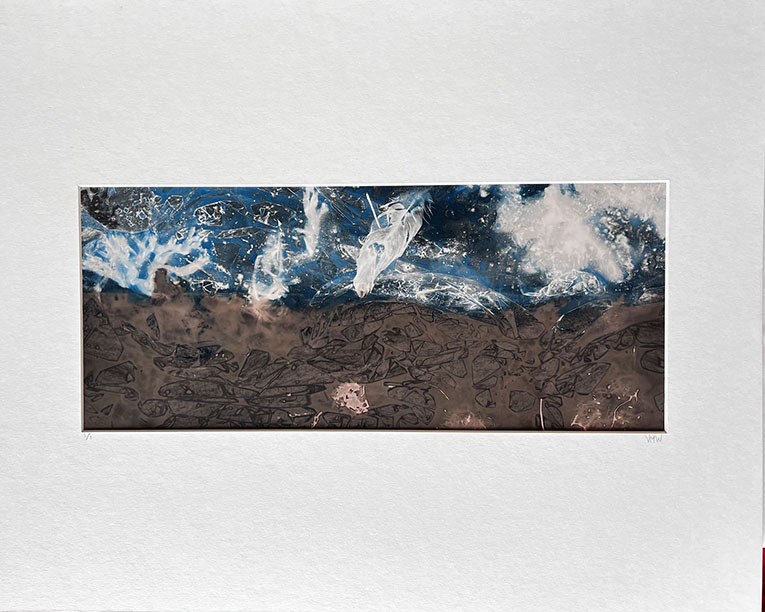
£200 – An original unique cyanolumen – mounted in white wood frame with glass 50x40cms
Our Suffolk coast is constantly in a state of flux. Every second of every day change is taking place either as 10 metres of cliff is slithering into the sea or a thin layer of sediment is being deposited on mud flats. This image above represents the later moments within salt marsh.
This image explores alternative photographic processes and engages with the minerals, forms and water of specific locations.
I made my own photographic developer from Bawdsey Beach bladderwort (seaweed) and incorporated it with cyanotype techniques. Following, exposing this light sensitive paper to Suffolk sunlight, I fixed the image in River Ore salty seawater.
I collaborate with nature as my eco art partner. I am never certain what might happen but sometimes the essence of my messaging is captured.
Image. Sea, Salt and Purslane
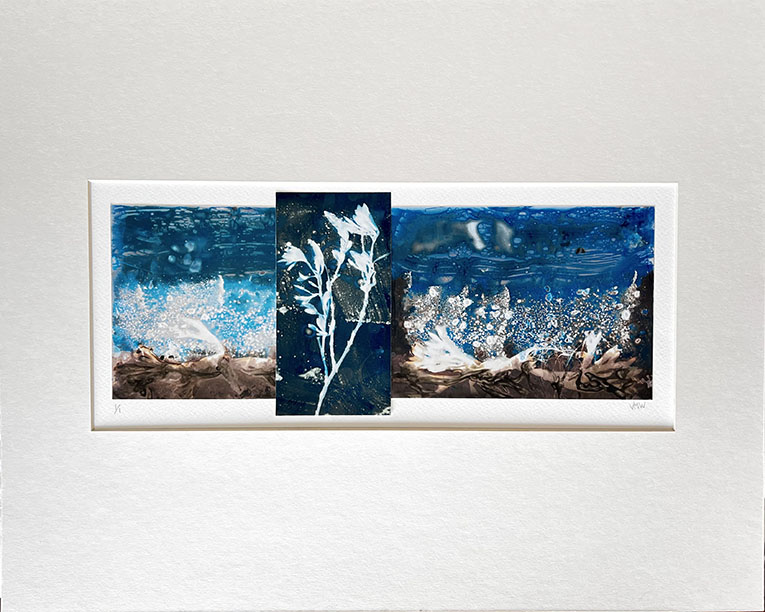
£200 – An original unique cyanolumen – mounted in white wood frame with glass 50x40cms
Salt Marsh is formed in relatively sheltered coasts where silt and sand accumulate and become colonised by salt tolerant plants such as sea purslane, golden samphire, glasswort and sea asters. These plants then trap sediment and the marsh transforms into a filter for tidal water capturing nutrients and foods twice daily. However, salt marsh is not only home to endemic plants and an exceptional variety of invertebrates, it also plays a pivotal role in flood defence and carbon sequestration. An edge of utmost importance.
This is another art presentation using similar techniques to above, but with a greater emphasis on the vegetation to be found in our Salt Marshes.
Image. Annual Sea-blite
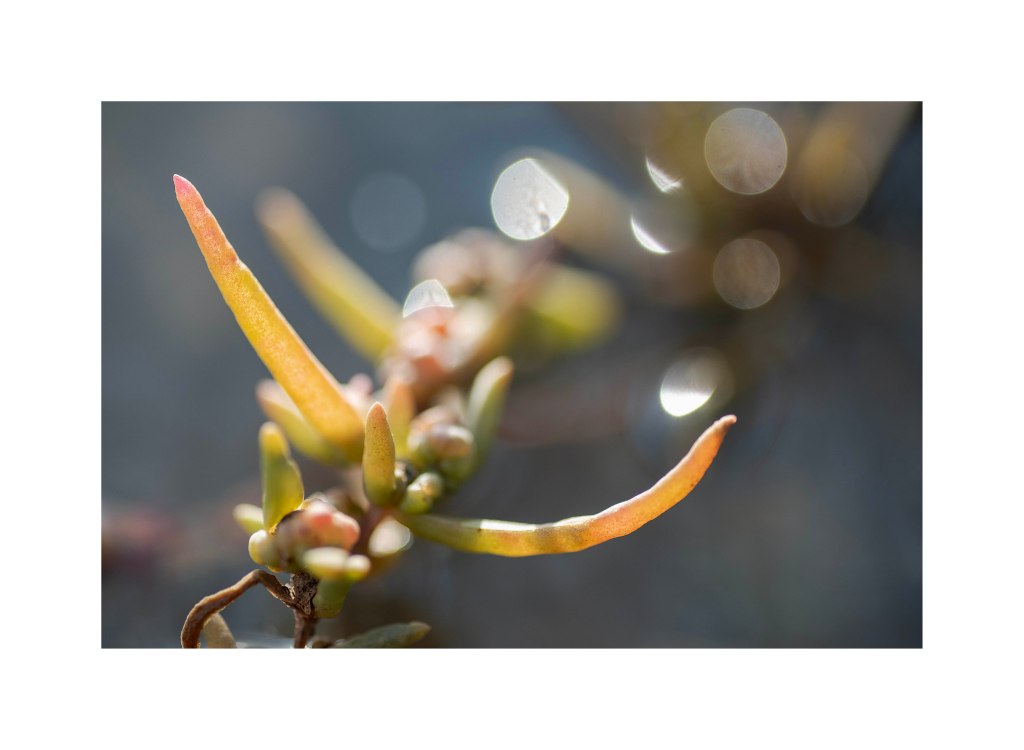
£200 Limited Edition of 5.
Giclee print – Hahnemuhle Baryta archival paper – mounted in white wood frame with glass 50x40cms
Annual seablite (Suaeda maritima) is a native, succulent coastal specie of SeaBlite. It is an annual salt tolerant herb found in the middle and lower parts of saltmarshes. It acts as an early colonist of intertidal mud- and sand-flats, often found in dense stands of unbranched, upright plants to around 30cm in height, but plants may also be branched and spreading or sprawling. The petalless flowers showing in July to September are carried in small whorls at the bases of the linear, blunt-tipped, succulent leaves.
This image was made early morning during my explorations of the Marsh at Simpson’s Saltings, Hollesley, late last year. I have made minimal changes to the file relying on my camera techniques at the time of capture.
Image Ripples of Change
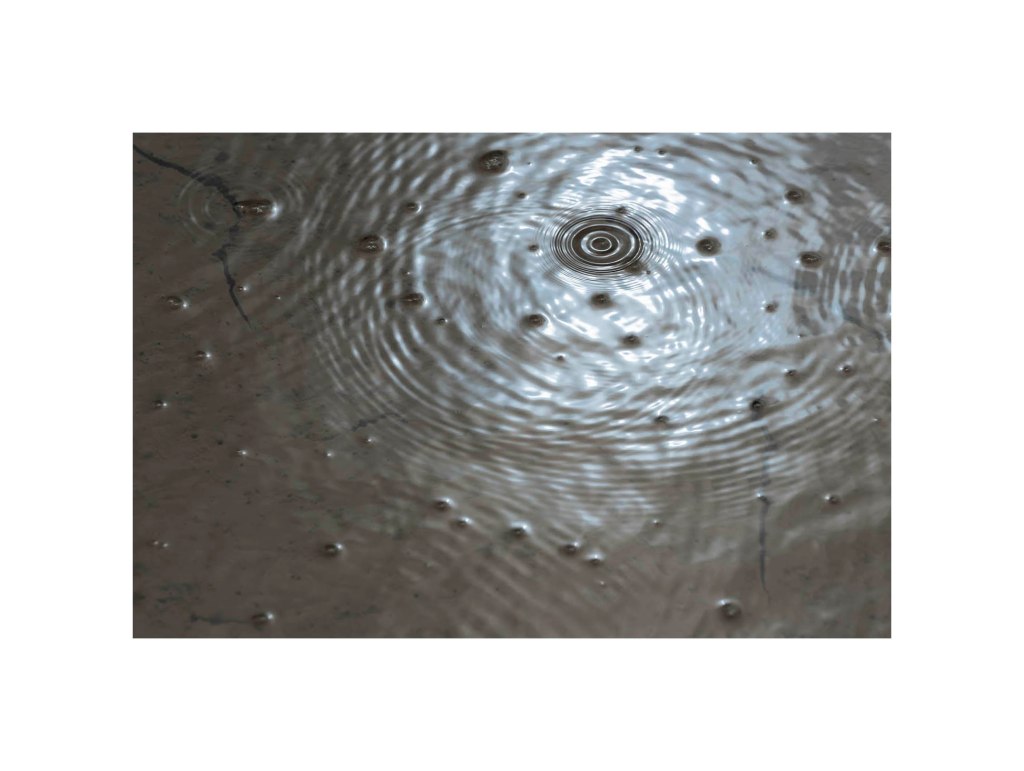
£200 Limited Edition of 5.
Giclee print – Hahnemuhle Baryta archival paper – mounted in white wood frame with glass 50x40cms
Ripples of Change , captures the tiny rings and ripples in the shallow water of Butley salt marsh as the tide turned and began to wash in over the mud.
Ragworms (Hediste diversicolor) and Lugworms (Arenicola marina) build deep, extensive networks of tunnels in the sediment. As the tide rolls in, water forces its way into their empty tunnels, compressing the pockets of air left inside. The air escapes upward and bursts through the wet mud surface, creating loud, distinct physical pops.
The ring is made when the compressed air forces its way out of a worm burrow, forming a small bubble beneath the water film. When that bubble breaks the surface tension of the shallow water, it sends out perfect miniature concentric circles.
I have seen dozens of burrows expelling air in the shallow advancing tide. I looks as if the sea is boiling as hundreds of these tiny rings collide with one another to a cacophony of pops
Hope you enjoy my images
Please read my 9 months research and view other resultant artworks on my blog https://vmwphotography.com/2026/06/20/2026-7-coastal-change-edgeland/

