2025/7 Part 1. Coastal Change – Edge Land Project
Creativity at the edge of a changing Suffolk Coast
A two year, multi disciplinary art project involving over twenty artists, writers, poets, photographers and performers examining man-made and natural change on the Suffolk Coast
Late summer 2025 I was delighted to be invited to contribute to a 2 year art project, entitled Edge Land, focussing on Suffolk’s coastal region and the changes ensuing over that period. The project aims to spark conversation about place, ecology and change along our unique stretch of UK coastline through 5 art exhibitions during 2026 and 2027.
My Background and Research
Globally much is occurring which seems to be counter to life on earth and specific local changes are considered detrimental to our natural environment.
Britain has become one of the most depleted biodiverse countries in the world – https://policy.friendsoftheearth.uk/insight/how-britain-became-one-most-nature-depleted-countries-world)
For a number of years my personal art oeuvre explored environmental issues and the beauty of natural form. For this project I aim to focus on aspects of positive natural changes, guided by these last words from Dame Jane Goodall (1934 – 2025). My project will reflect my hope for a future which embraces ‘land ethics’.
‘Without hope we fall into apathy and do nothing.
In dark times that we are living in now,
if people don’t have hope we are doomed’
Jane Goodall 2025
The land ethic posits that “a thing is right when it tends to promote the community, the biotic community, and it is wrong when it tends otherwise.” (Handbook of Philosophical Ecology. p.27. Douabul).
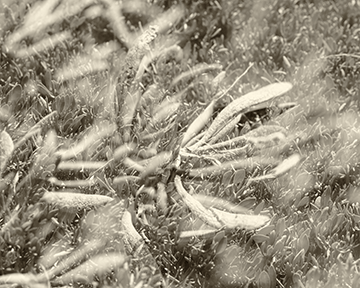
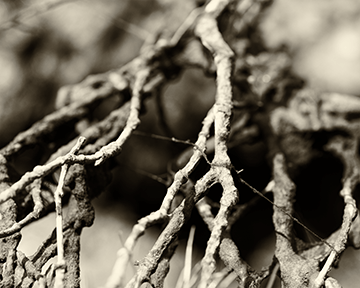
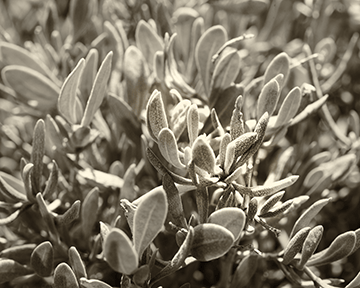
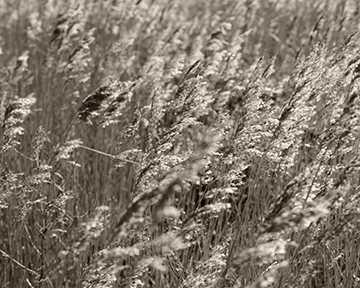
I have work in partnership with nature not only for my art but importantly for the health of the local environment. I have built a range of techniques within my photographic practice, which entails a close collaboration with natural processes. Together we can show and share the beauty of the complex natural interrelationships found along our coast – often unseen. For me, my creative endeavours are about expressing my vision, my values and my vulnerability, communicating not just what I see but what I sense.
My ongoing research for this project extended from coastal landscapes books to environmental philosophy writings.
I enjoyed W. G. Sebald’s book ‘The Rings of Saturn’, particularly his description of Dunwich, one of the most important ports in Europe in the Middle Ages ‘all now under the sea beneath alluvial sand and gravel over an area of two to three square miles‘ (p155) following storms and hurricane in 1328. Over the following centuries coastal erosion continued and little by little the people of Dunwich accepted the inevitability of the coastal systems (p158) and migrated westwards. Although Sebald described the seaward vista as having a sense of emptiness, personally I experience a sense of timelessness.
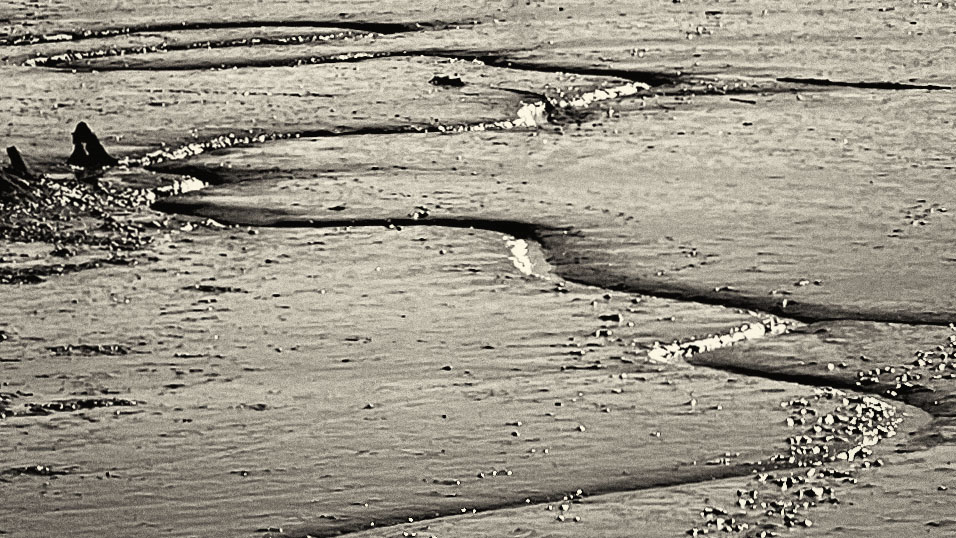
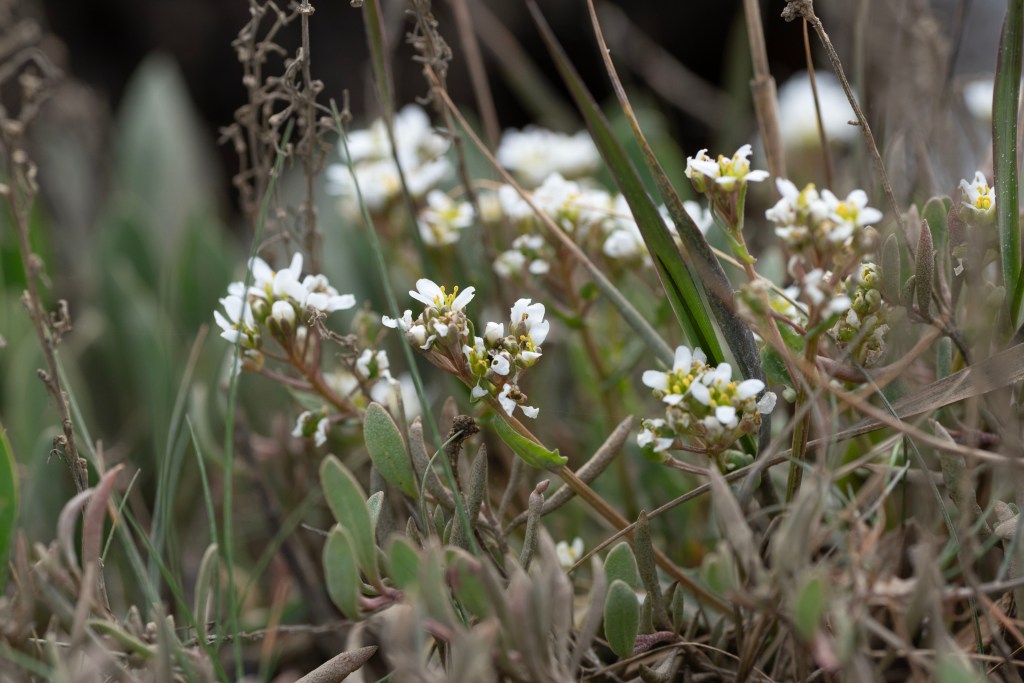
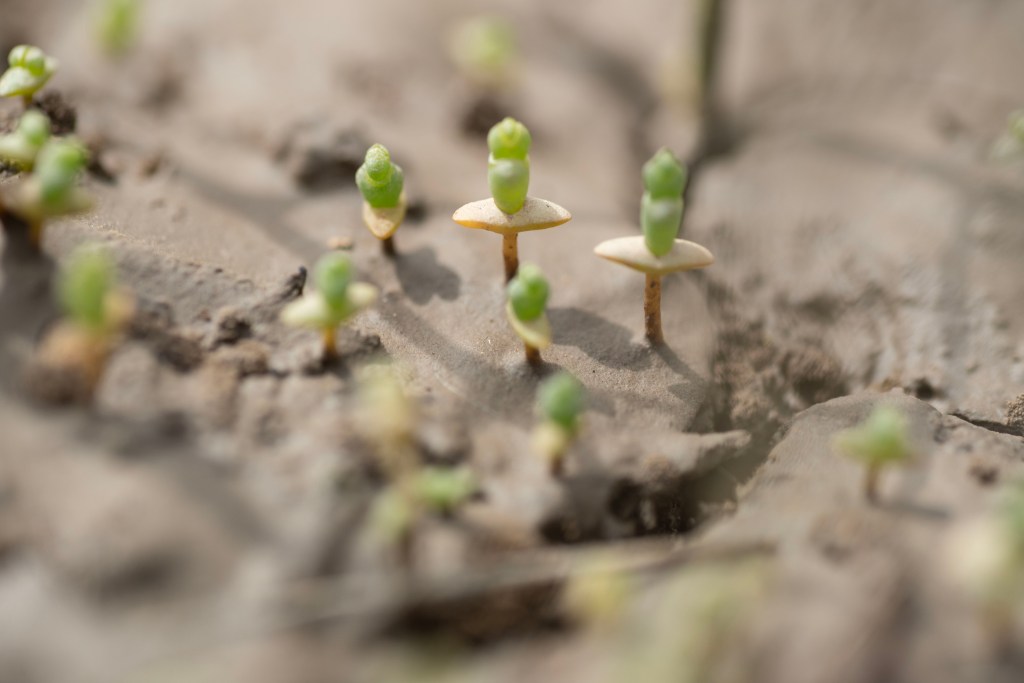
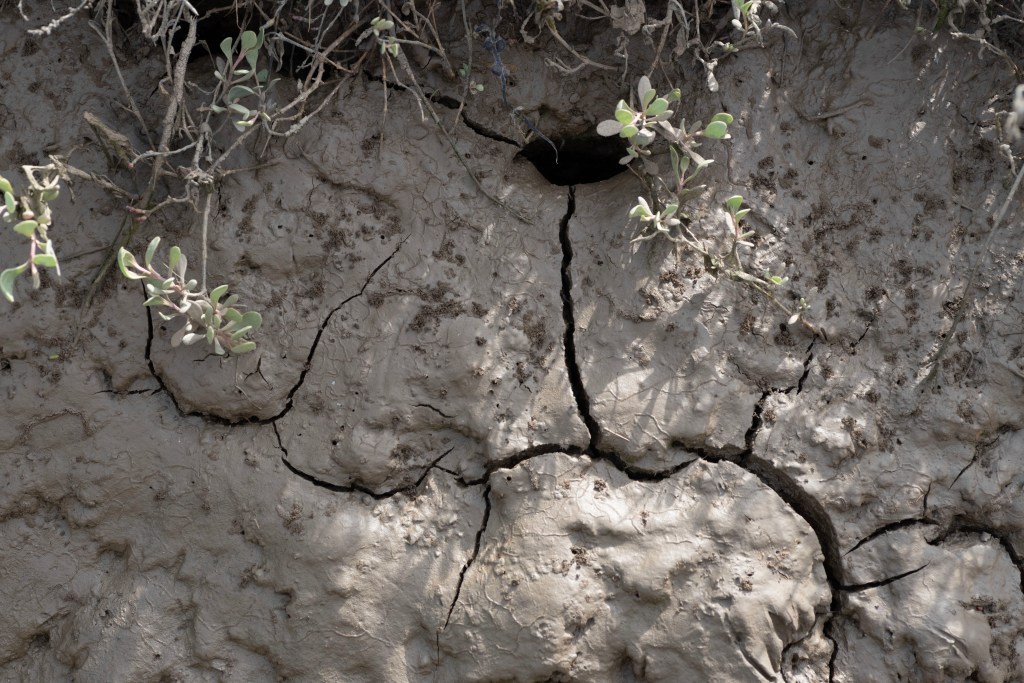
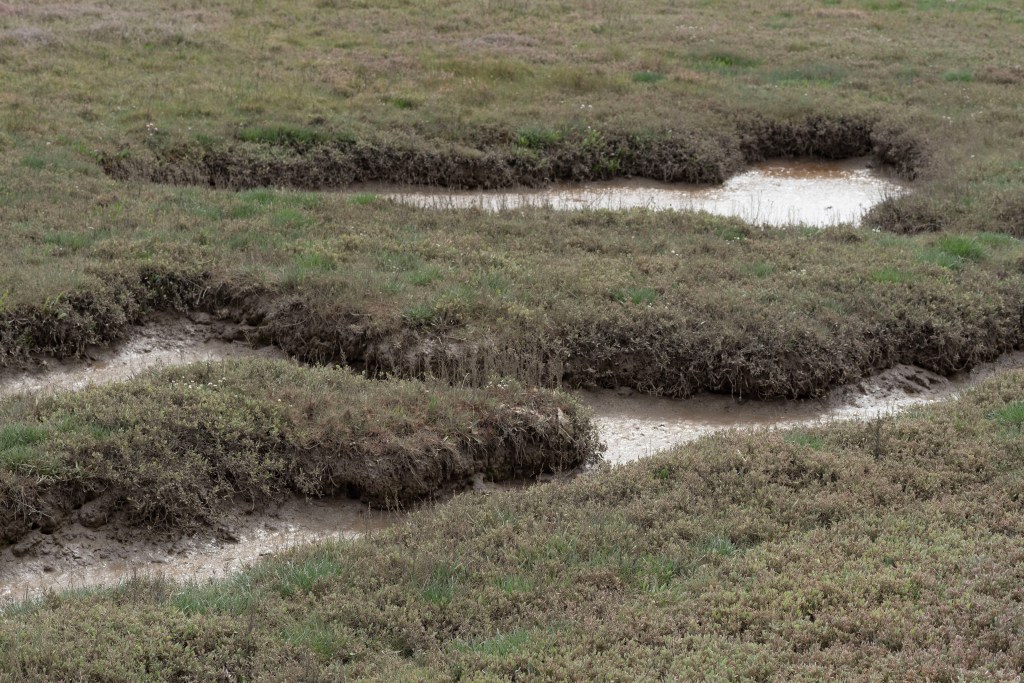
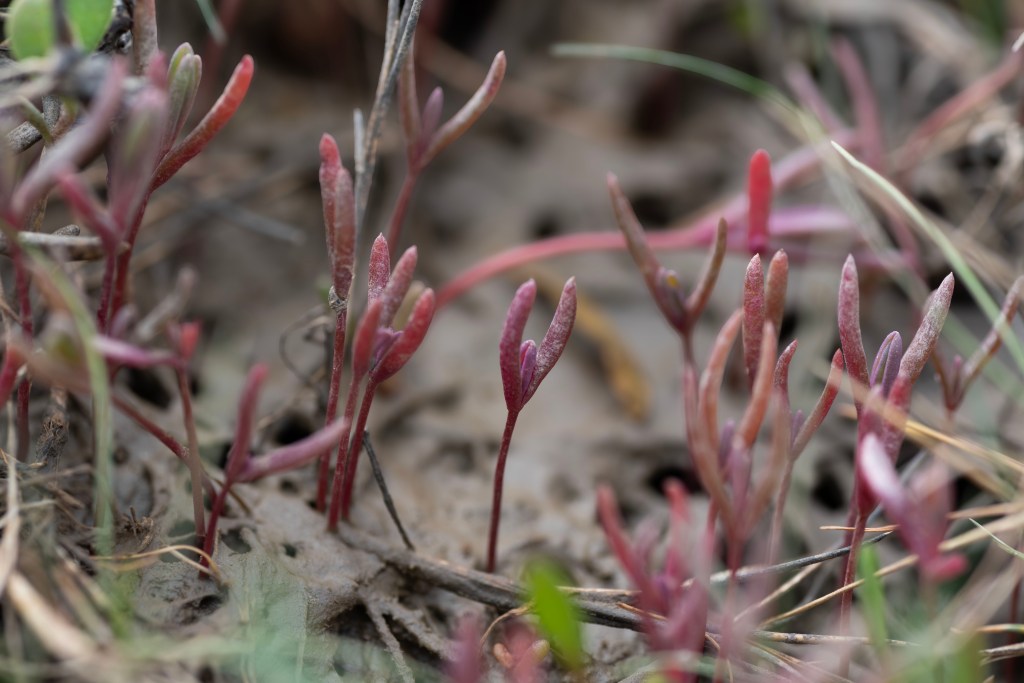
Robert Macfarlane describes the East Anglian coast in his book ‘The Wild Places’ and gives us detail of Saltmarsh. He discusses how it is formed in relatively sheltered coasts where silt and sand accumulate and becomes colonised by salt tolerant plants such as sea purslane, golden samphire, glasswort and sea asters. These plants then trap sediment and the marsh transforms into a filter for tidal water capturing nutrients and foods twice daily. The marsh, over time, becomes a maze of channels and creeks, or rilles as they are called in Suffolk.
Clive Chatters‘s 2017 book ‘Saltmarsh’ describes the international importance of Saltmarsh and maps its role in conservation (p243). Saltmarsh is a unique microhabitat serving as an essential nursery for juvenile fish and feeding ground for migrating wadders. However, not only is saltmarsh home to endemic plants and an exceptional variety of invertebrates, it also plays a pivotal role in flood defence and carbon sequestration … (along with inspiring artistic endeavours, what is not to love about salt marsh!) Nevertheless, much salt marsh has been destroyed by man over recent centuries.
In the 21st century the experiencing of environmental and ecological crisis after crisis, significantly signalled by Rachel Carsons in 1962, has bought into question the wisdom of continuing such a course for humanity. A new philosophy is called for. Philosophers such as Henry Thoreau, Aldo Leopold, Bruno Latour, Holmes Rolston III and Arne Naess, to name but a few, purported a different thinking of nature (Deep Ecology) and more specifically (to this project) the aesthetic of nature.They interrogated ideology of human transcendence and the role of nature and art.
A book ‘Earth and Beyond in Tumultuous Times: A Critical Atlas of the Anthropocene’ edited by Réka Patrícia Gál and Petra Löffler mirrors my spirit of hope by providing a platform for topics and debates on Future Ecologies.
Nathaniel Stern‘s book ‘Ecological Aesthetics’ discusses this perspective of environmental art and change. I relate to his quote from Wyatt Tinder (p17 ) ‘How does the weather change our feelings? How do the winds shape our love? How do the tides take our breath away?
I have researched nature’s ability to respond, to adapt and to recover within a changing environment and investigated where human interventions locally are aiding this recovery. This perspective recognises that, whilst currently man-induced environmental challenges are being faced along our Suffolk coast, nature in its own time is capable to counteract and compensate.
The aim of my work is to tell the story of the immutable ‘Laws of Nature‘, by working in spaces that ‘take my breath away’. My art work will be a positive footnote to the negative consequences – topographical, social and environmental – of current coastal developments. In fact Stern believes any art work can be a force for potential change through communicating ethical responsibility.
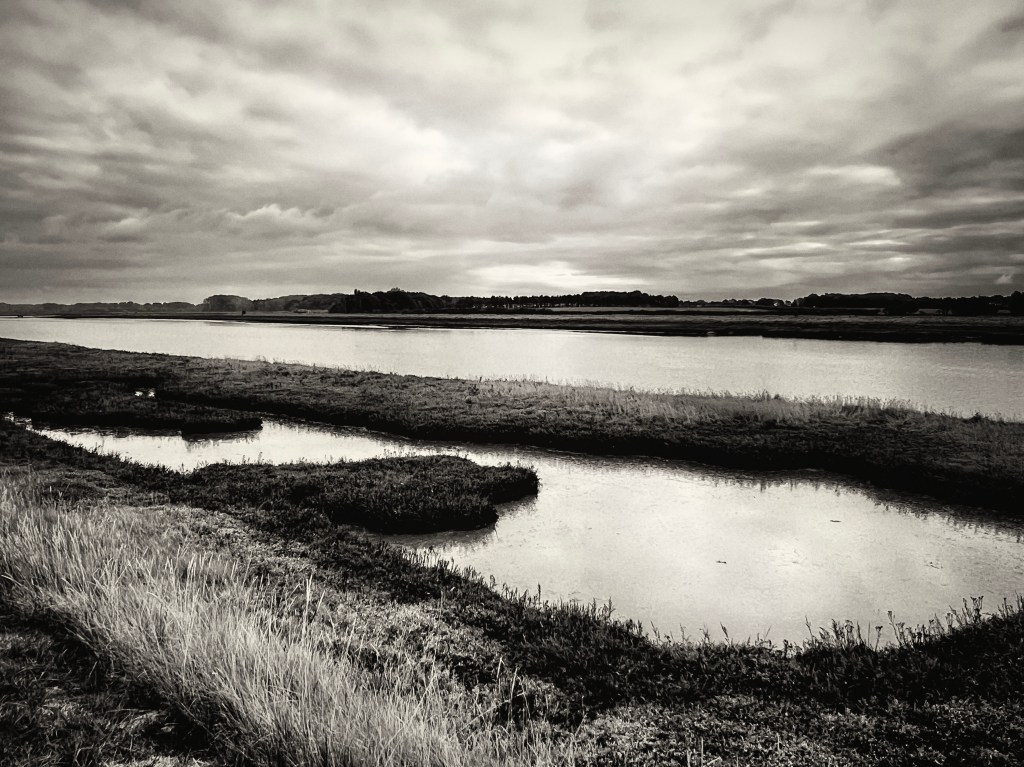
Butley River Winter 2026
For months I meandered the salt marsh, I dissolved into the salty air, muddy ditches and wallowed in a cacophony of slushes and squawks – a primordial liminal spaces. An edge always in transition. An edge of utmost importance. I have learnt about the ontology of our coast – how the sea and land responds to the tides and wind, how man’s activities harnessed and restrained these forces.
Suffolk’s natural salt marsh has been lost over the centuries much caused by human activities undertaken without understanding its importance to natural cycles. More recently scientists have evidenced this consequence (Earth Negotiation Bulletin email 21.10.25) and thankfully saltmarsh as a living ecological system is now better understood and work is underway to allow it to thrive and survive in tidal waters. (https://www.suffolkwildlifetrust.org/news/saltmarshes-and-mudflats-case-creation)
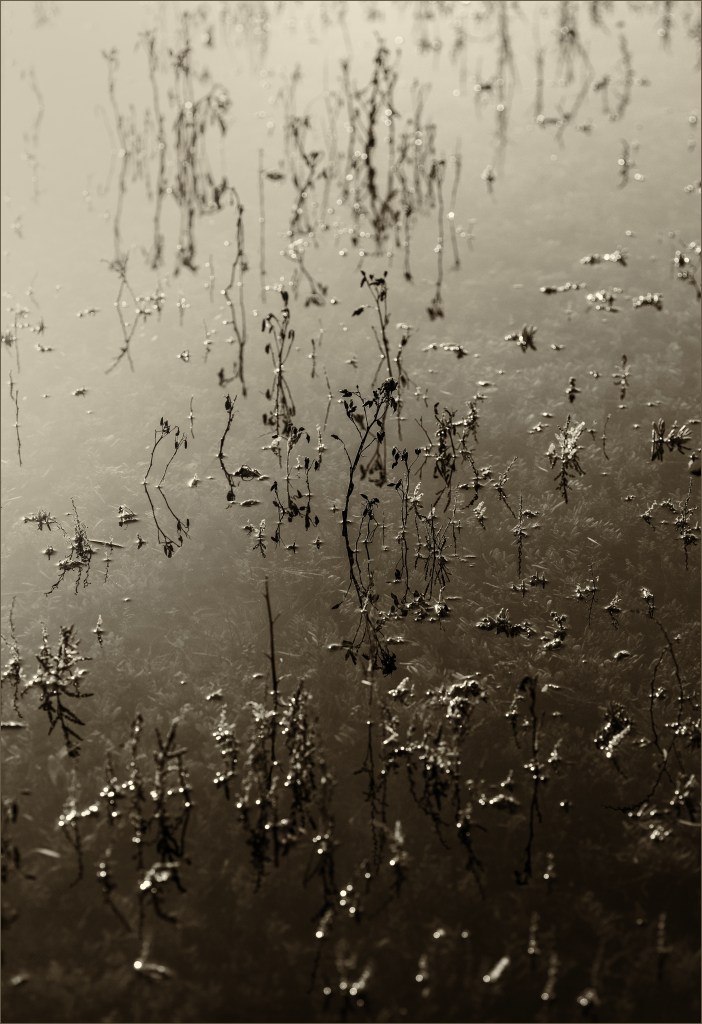
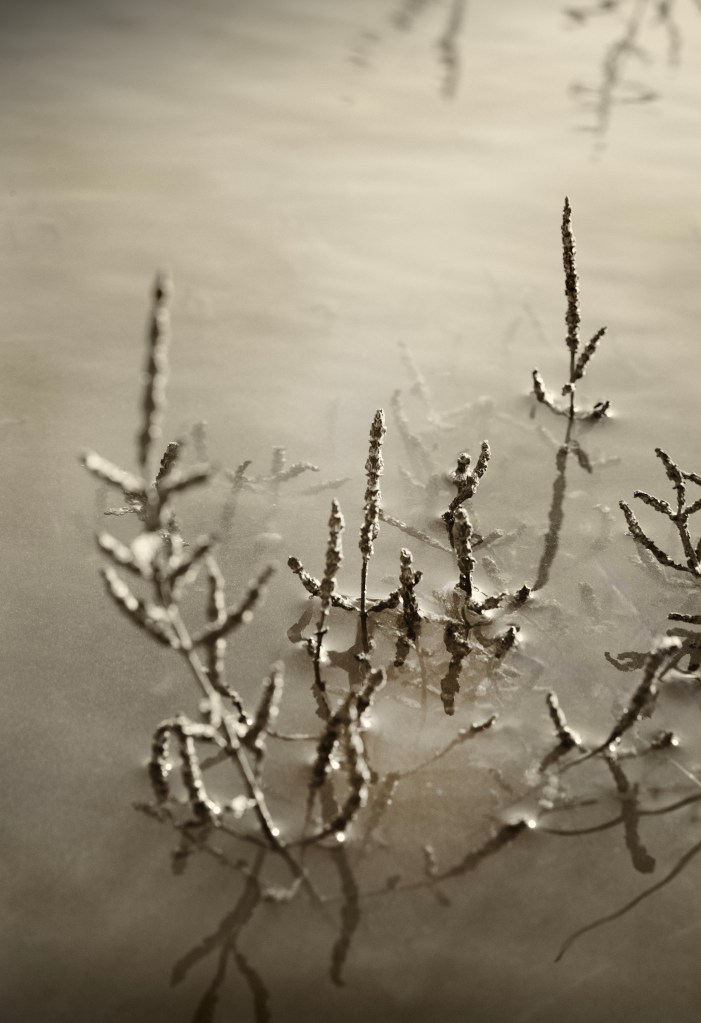
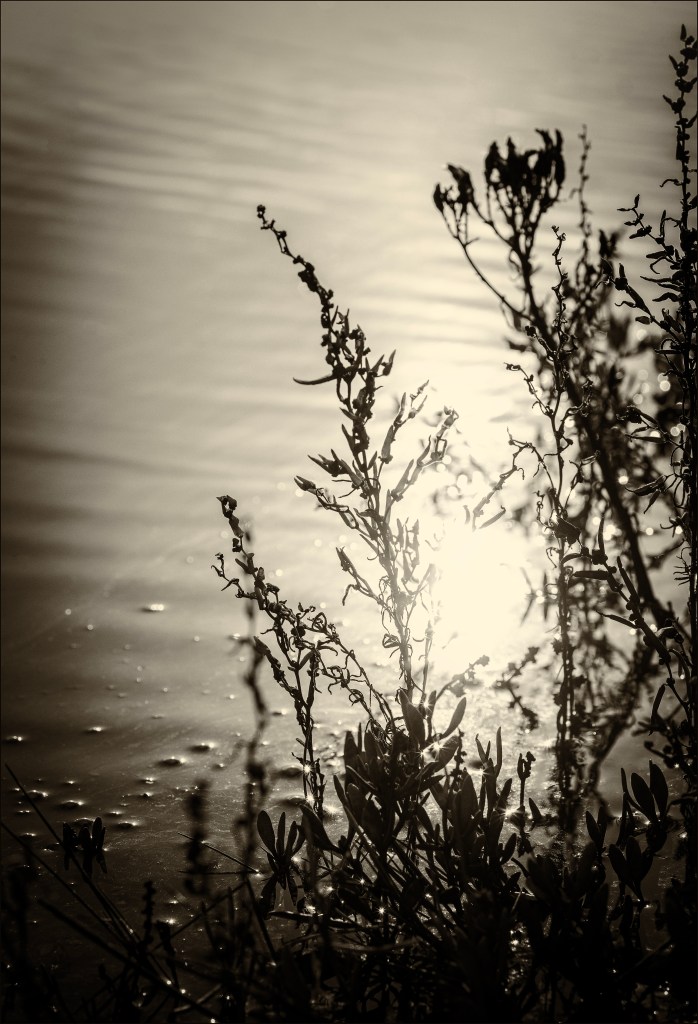
My winter images of high tide along salt marsh edges
My Experimentation
Artist often do not know in advance where their work is taking them. They follow their heart, values, and creativity
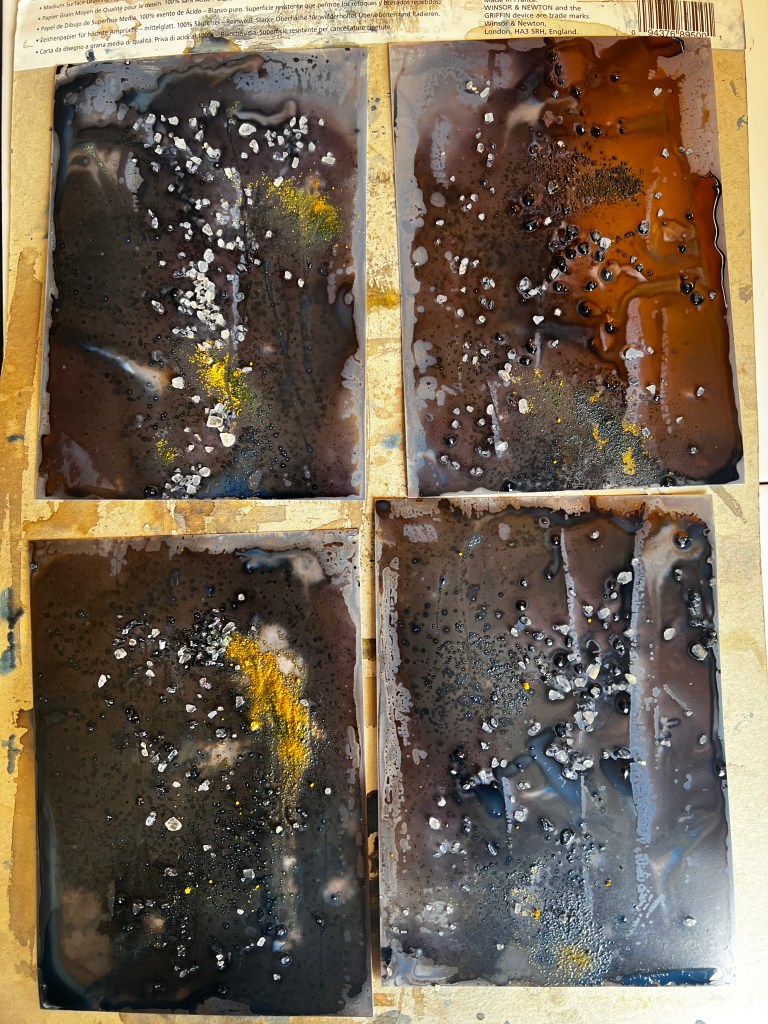
Experiments in Progress
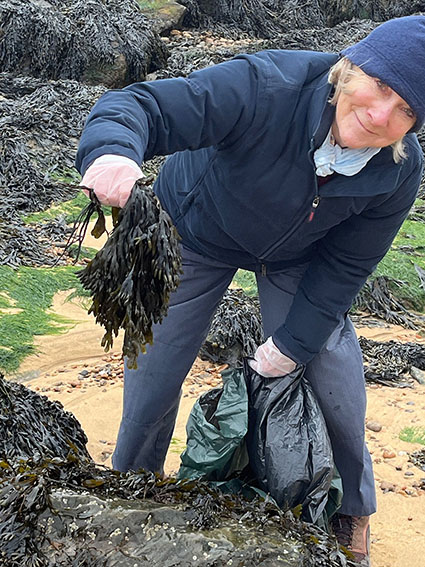
Tide-line seaweed, sprigs of purslane and bottles of salt water have been carried home in order to experiment with my own skill and creativity. Currently, my experimenting includes 19th century traditional photographic processes – now more commonly called Alternative Photography – and 20th century analogue (film photography) using home-made plant based developer, avoiding use of harmful chemicals and digital apparatus.
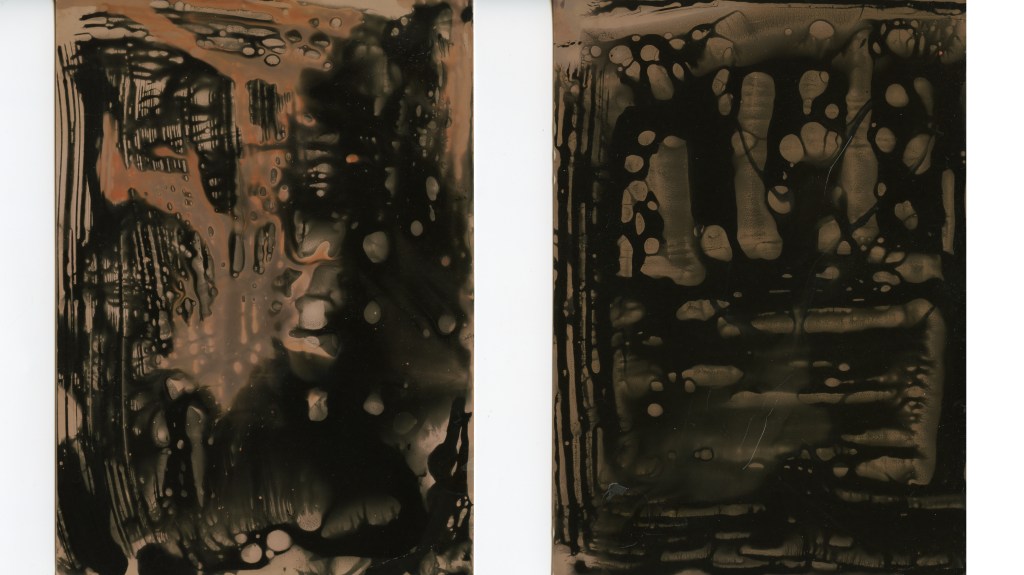
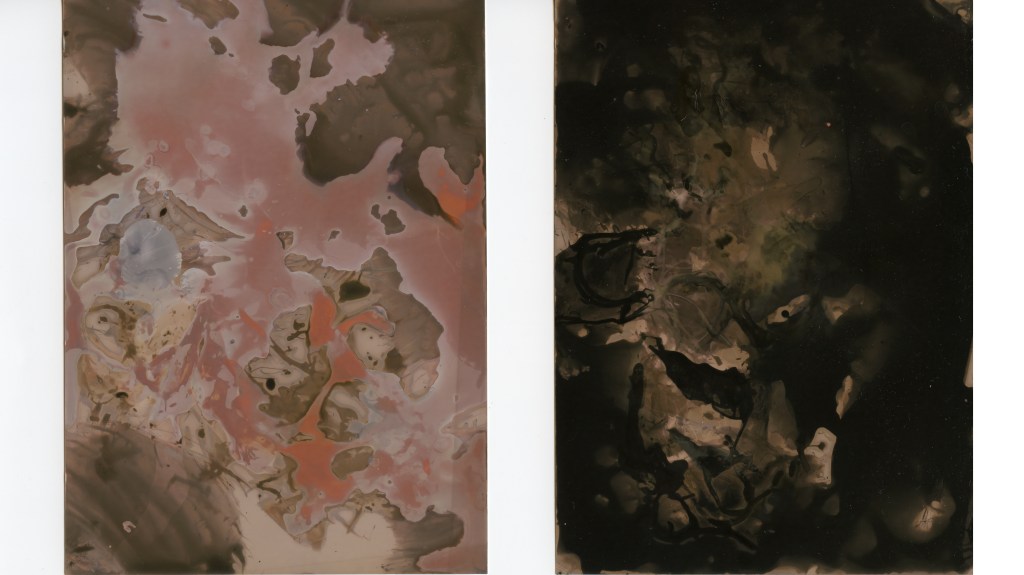
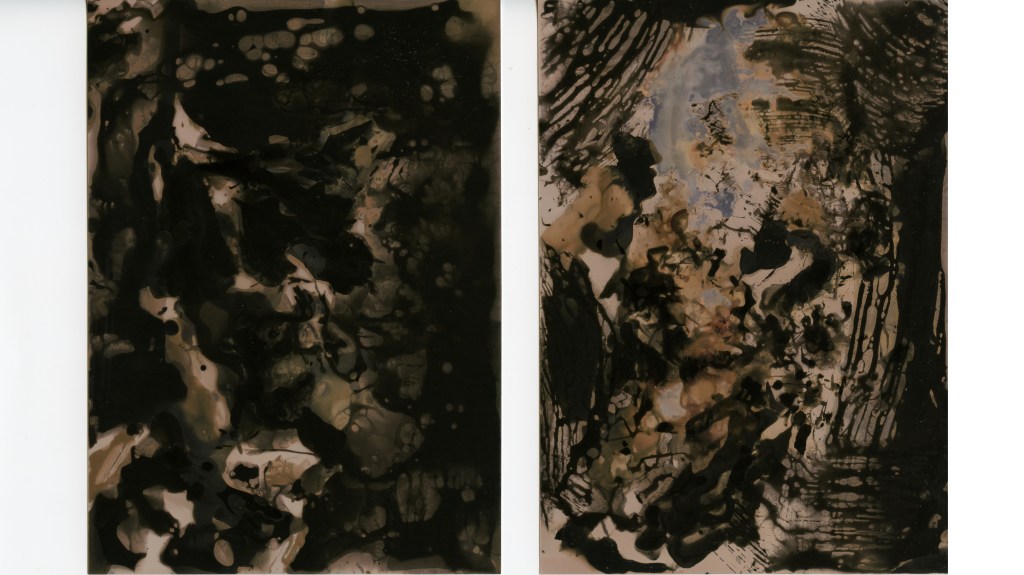
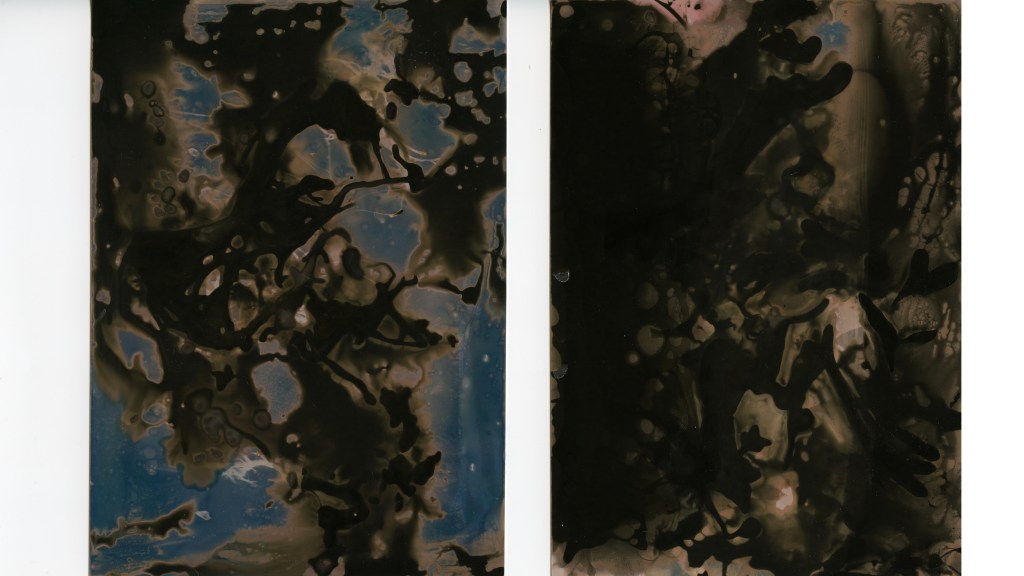
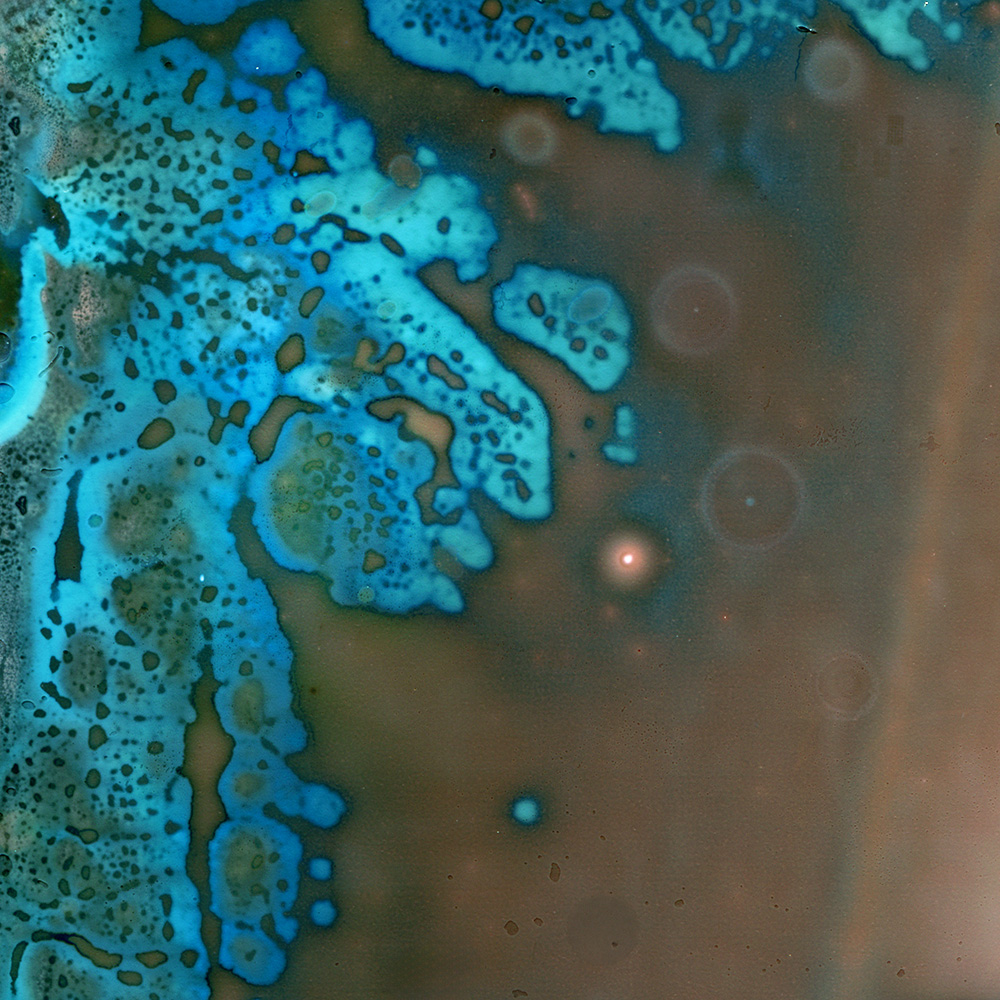
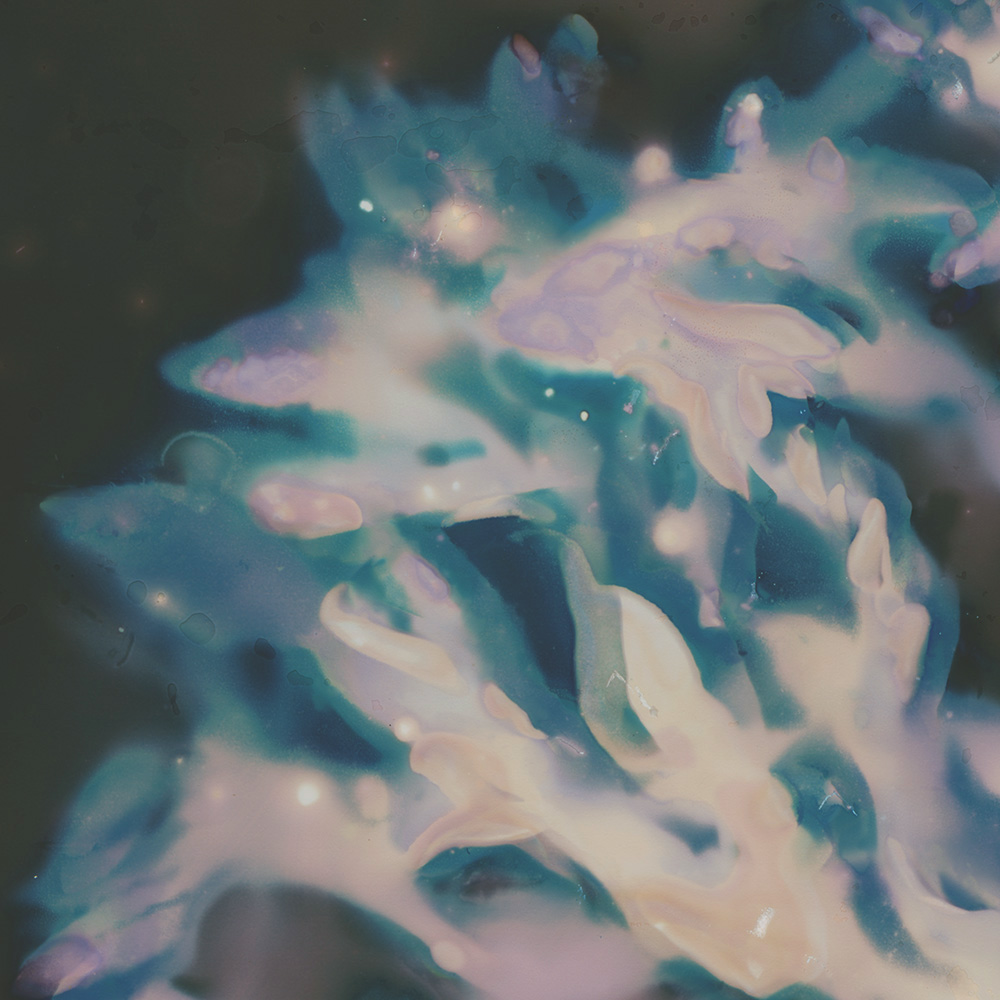
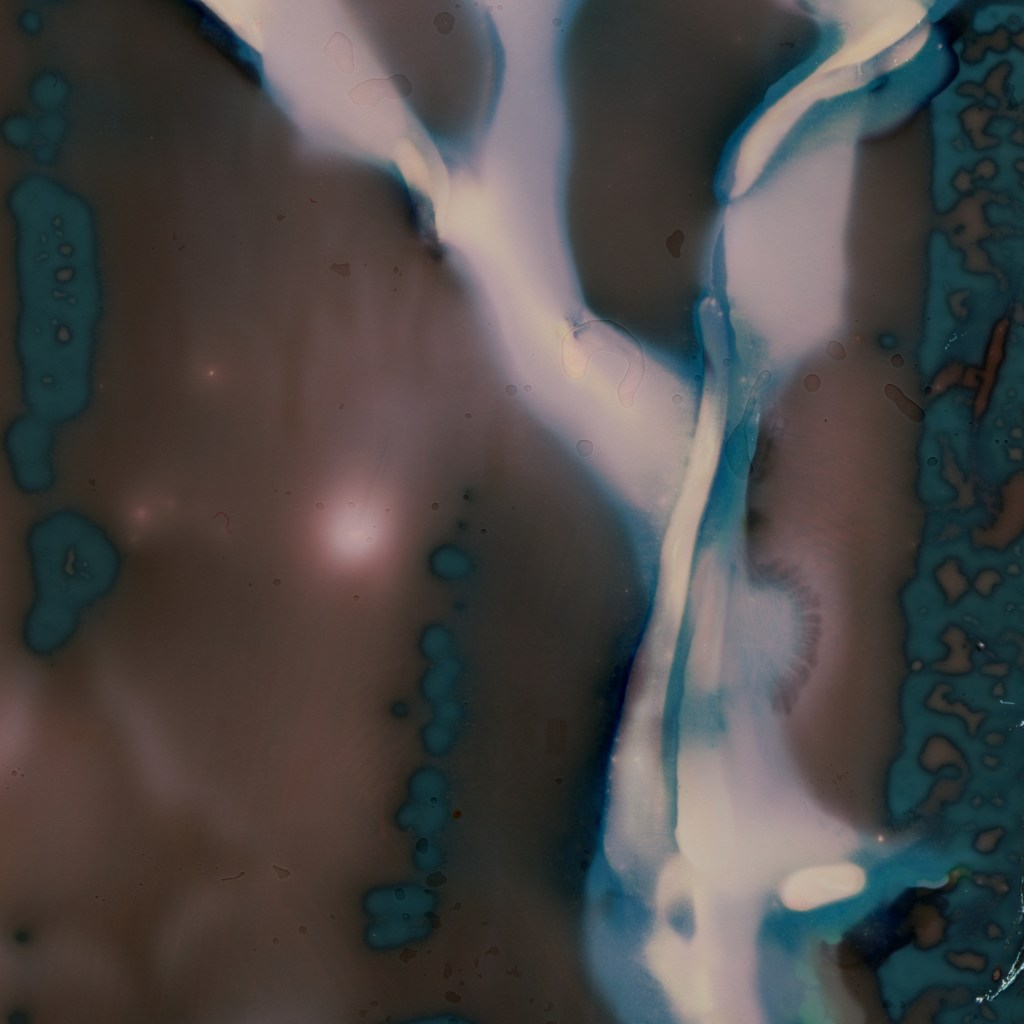
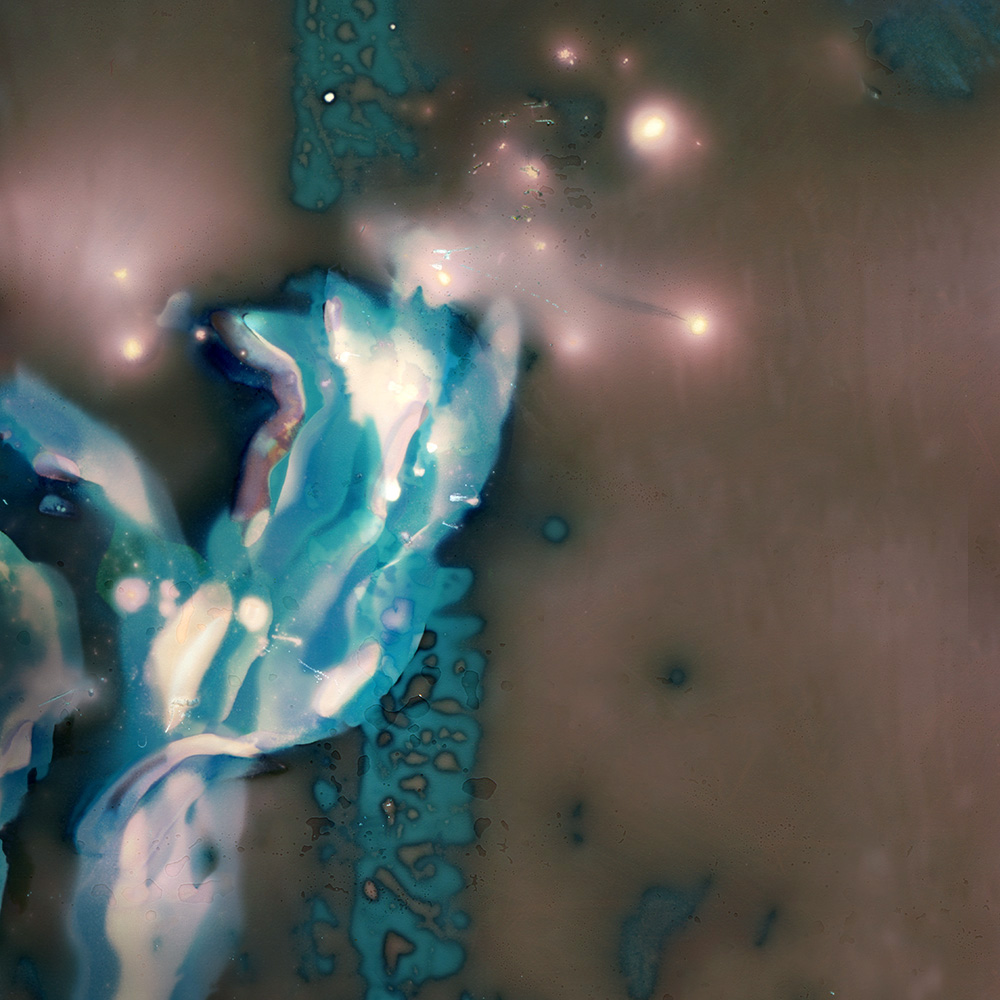
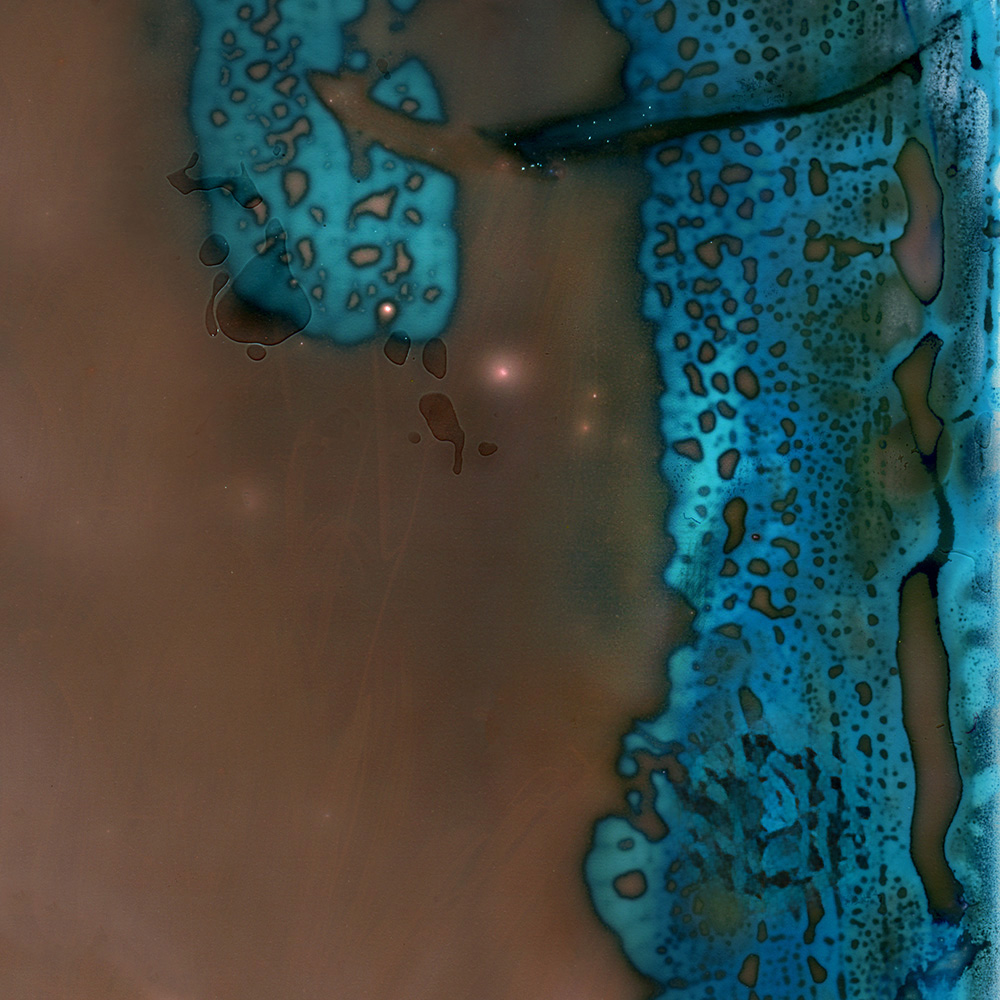
More experiments with Alternative Photography
Experimental photographs – analogue, few digital and camera-less – filled my work space as I tested my recent photographic degree studies and my inquisitive nature!
My Art Response
Eventually, I made a series of 6 images (‘Flux’ ) mounted in box frames and included a ‘found’ element from the shoreline. ‘Flux’, this series of my ecoart work, is an homage to the intriguing magical ever-changing vegetative habitats along our coastline.
The images are hybrid lumen/phytograms. Working in partnership with nature, I brushed washed–up shoreline vegetation with photographic developer made from Bawdsey Beach bladderwort, exposed the paper to Suffolk sunlight and fixed the images in River Ore salty seawater.
These images show the forms of nature which are intrinsic to the building, health and growth of salt marsh. The torn edges and organic compositions depict nature’s response to its threatened future; matching the increasing unpredictability of our shoreline in a time of global warming.
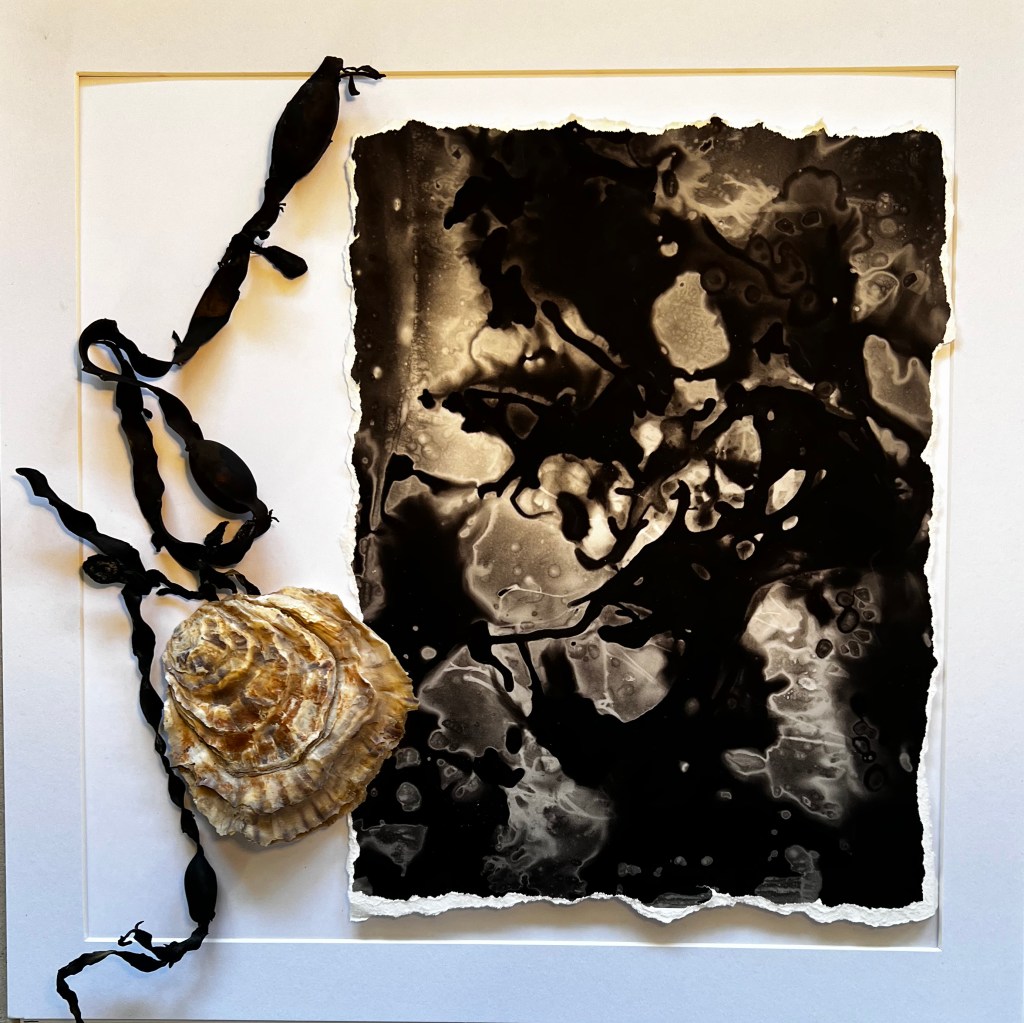
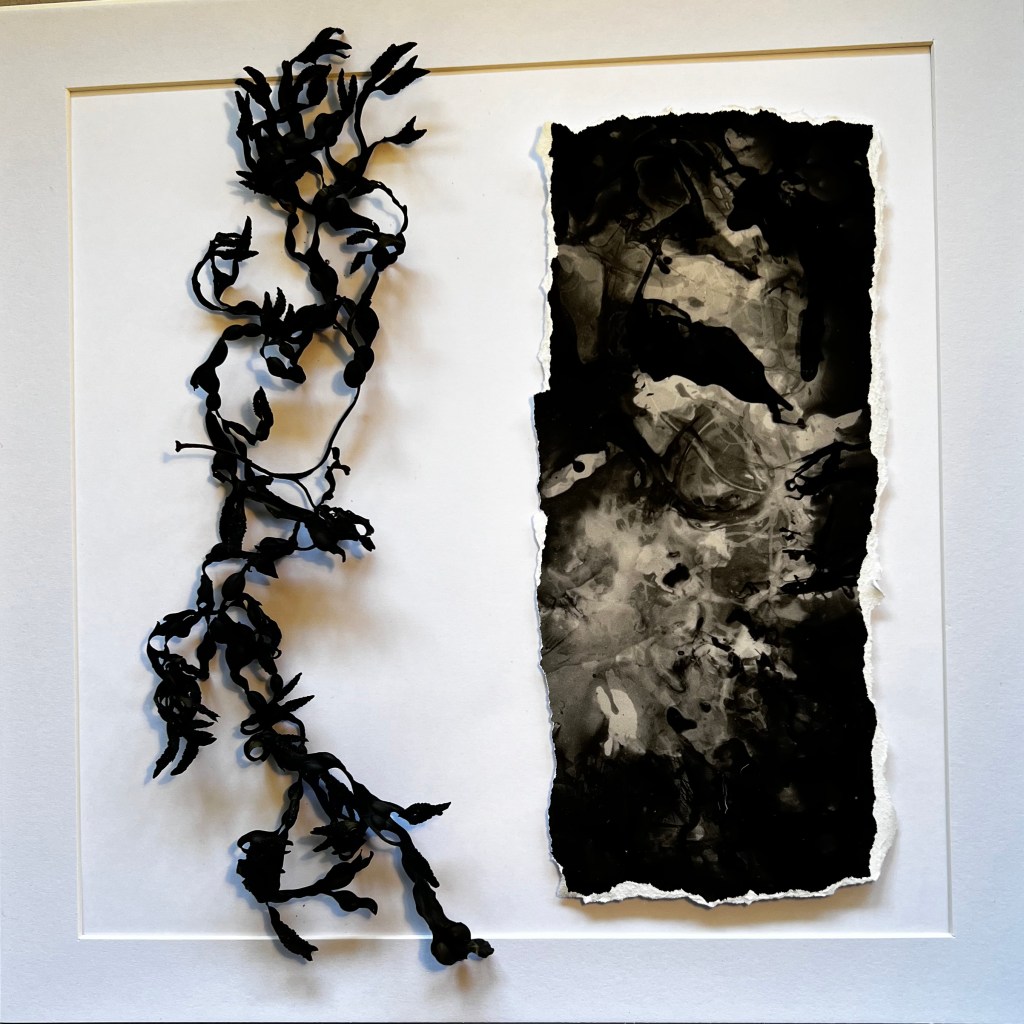
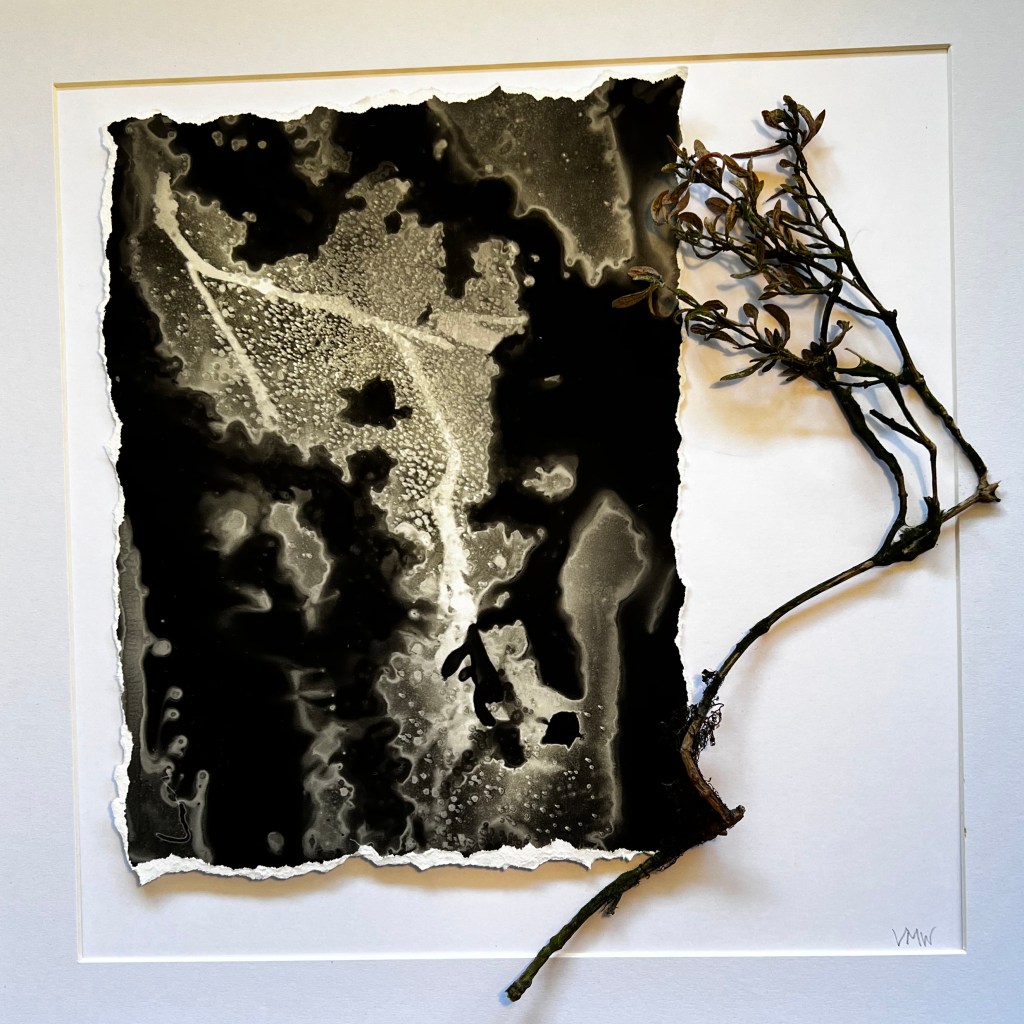
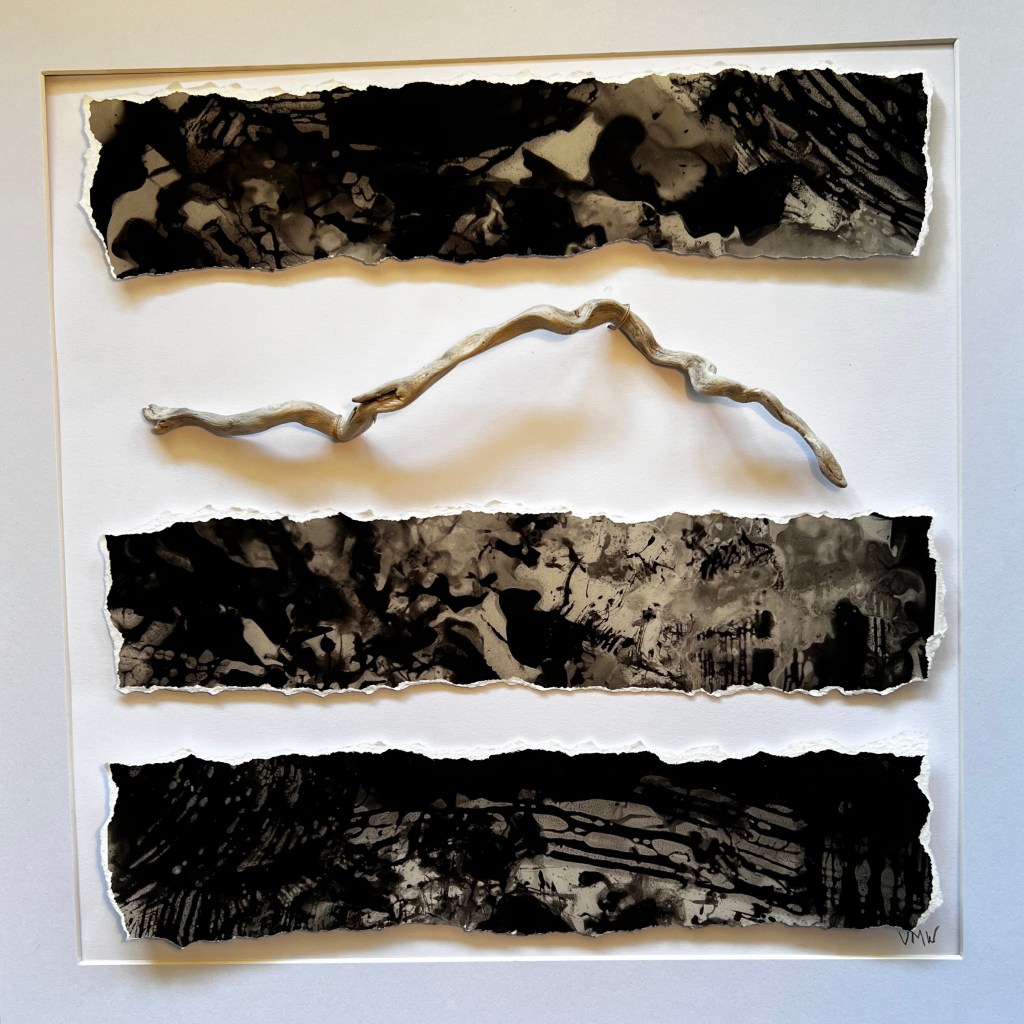
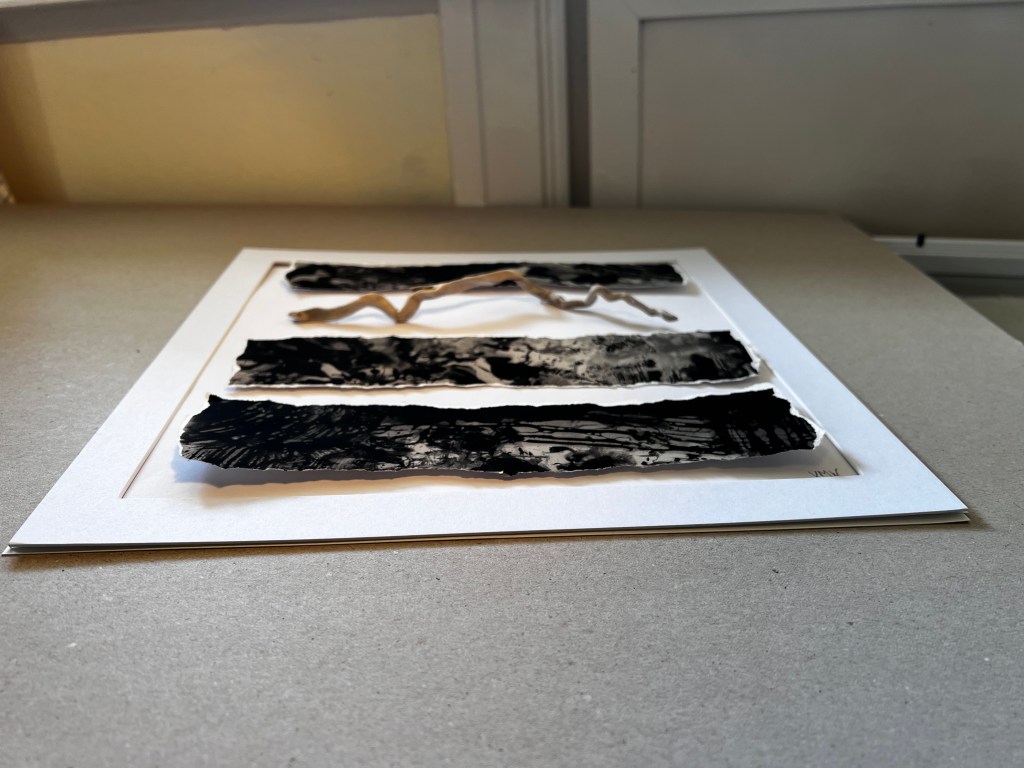
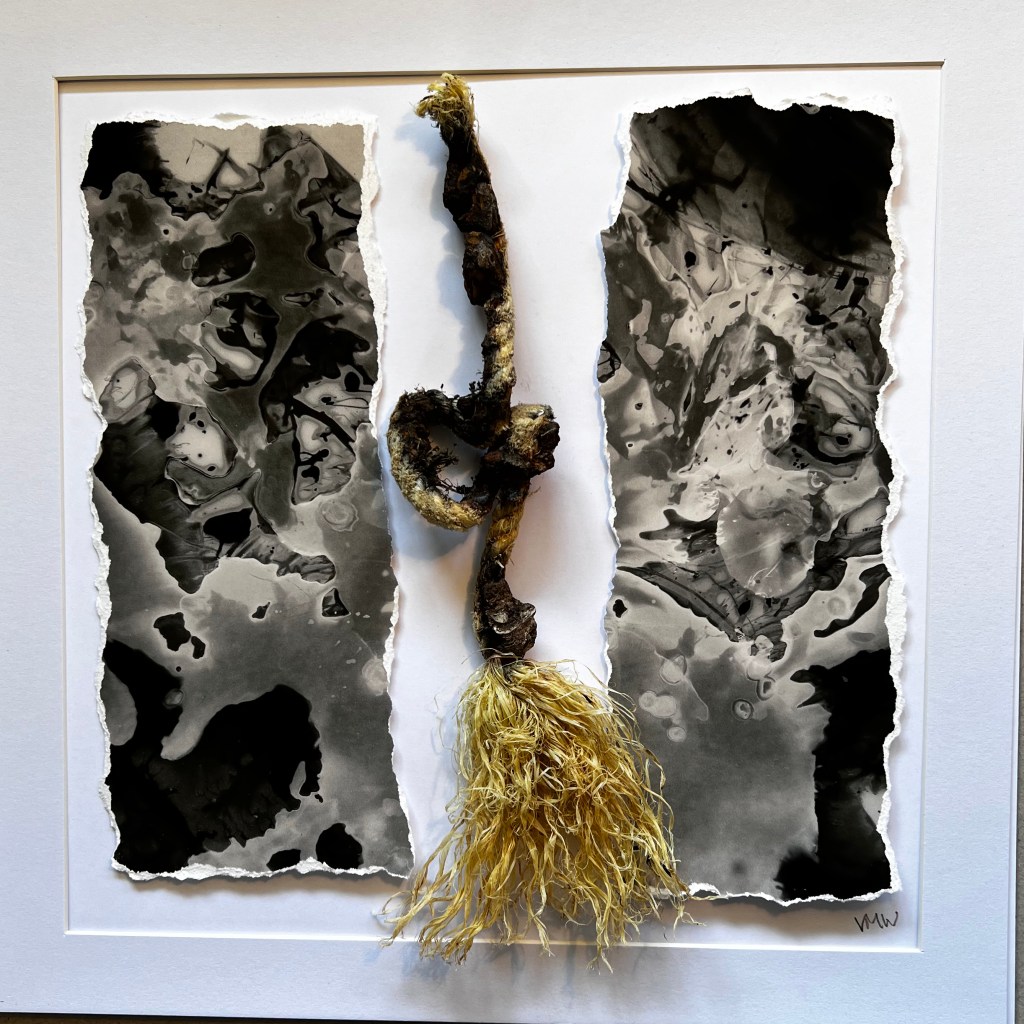
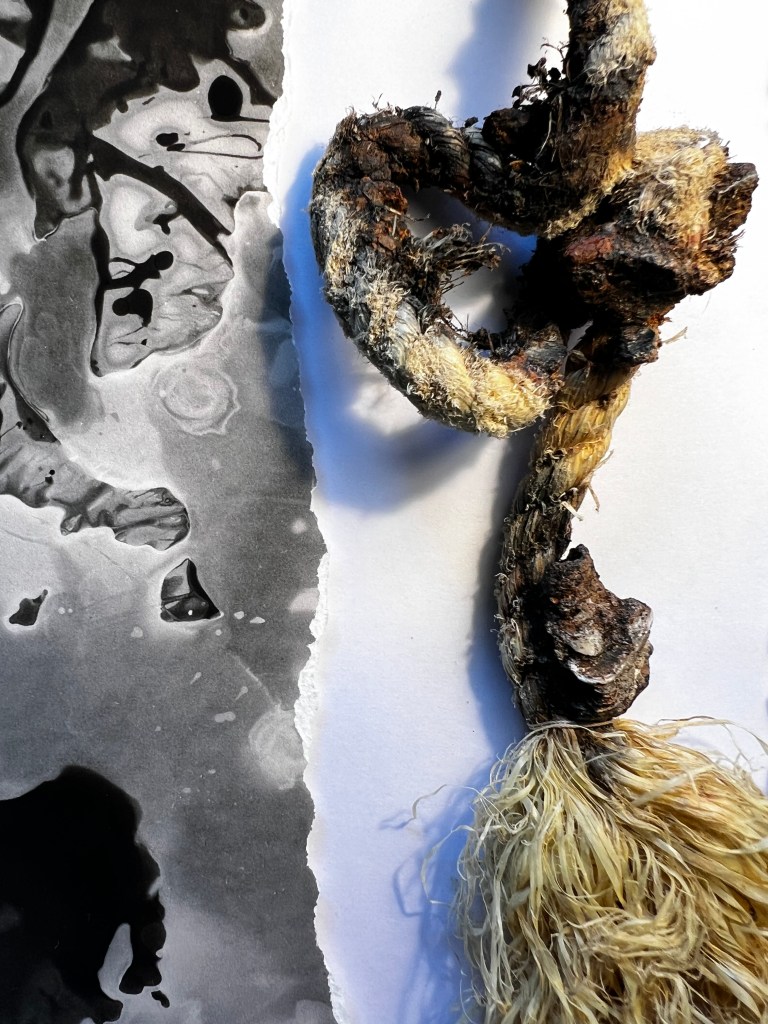
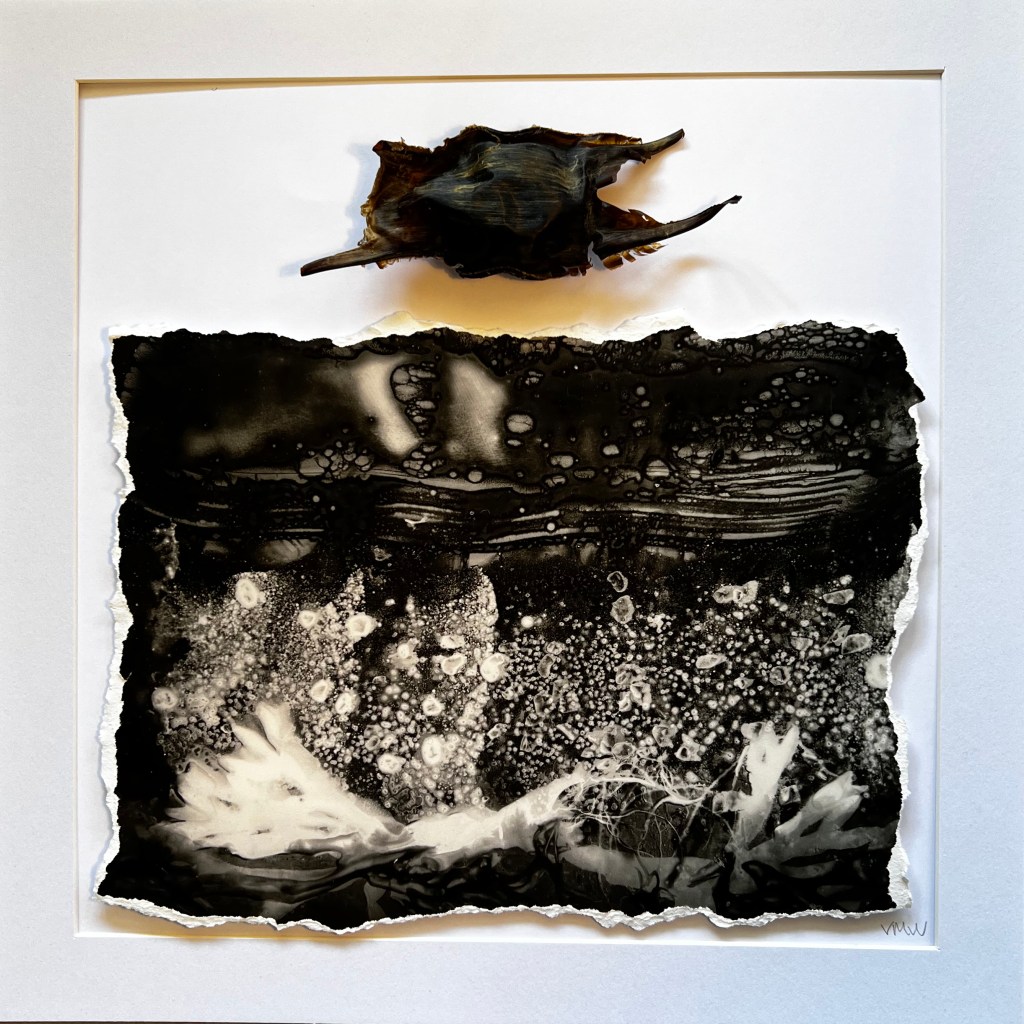
Flux, the 6 box frames, to be presented in two columns – total dimension 110cms high x 75cms wide see below
I was aware this series as a stand alone did not explain the ongoing dynamic processes along our coast. Every second of every day change is taking place either as a thin layer of sediment being deposited on mud flats or 10 metres of cliff slithering into the sea.
Therefore, in order to place my Flux series in context, I utilised the terminology of change from Suffolk Coast and Estuaries Coastal Habitat Management Plan (Champs) 2002. This lexicon I have termed an ‘Ontology of Coastal Change’.
I painted a map board (120cms high x 60cms wide). Pasted the words alongside a series of my more realistic photographs of the coastal features – in postcard format. (some taken on an analogue camera, Bronica Zenia, all printed on Hahnemuhle Baryta cotton paper) .
video. MapBoard – An Ontology of Suffolk’s Coast
As suggested I visited the site for the project’s first exhibition – The Long Shop Steam Museum Leiston
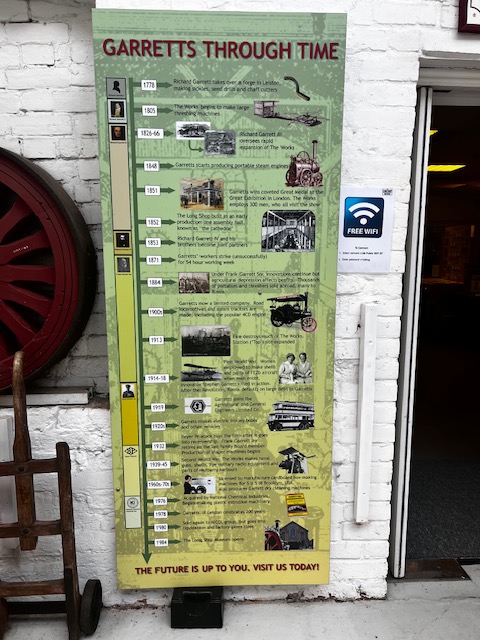
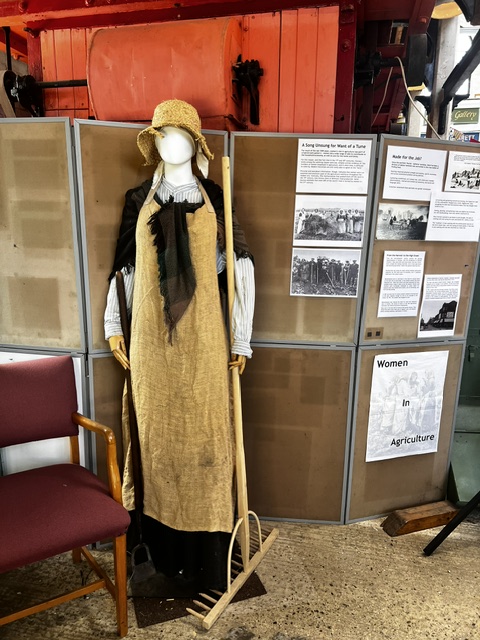
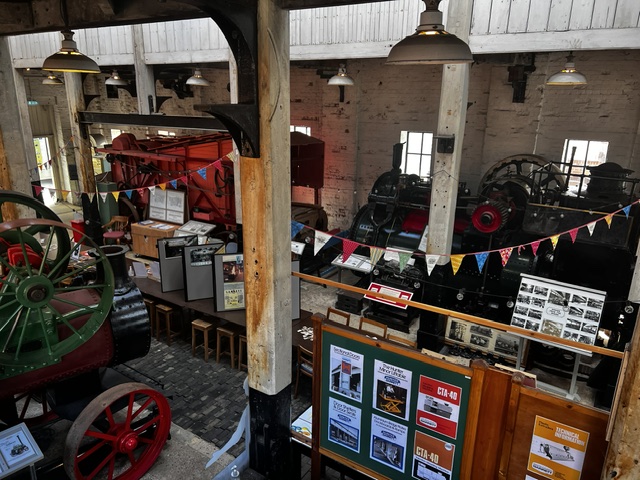
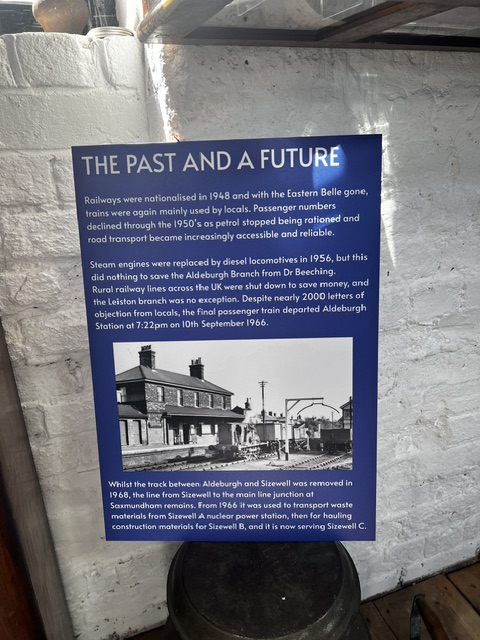
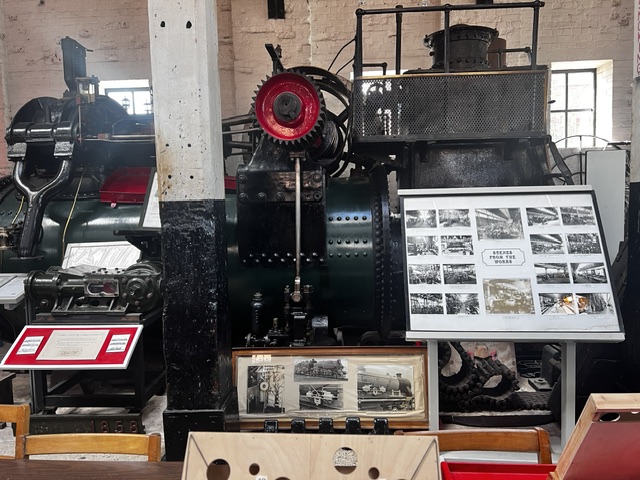
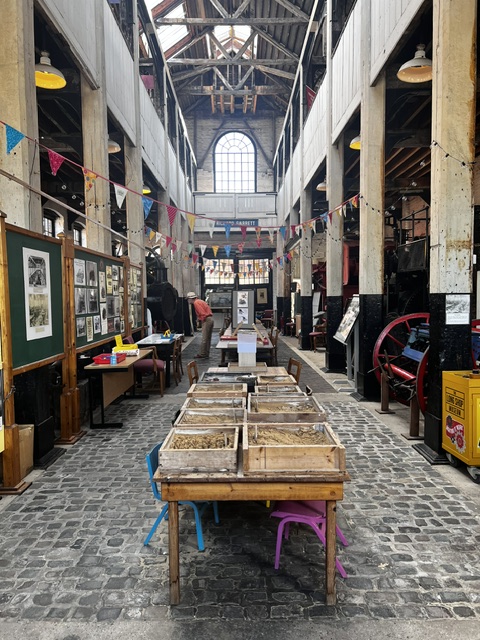
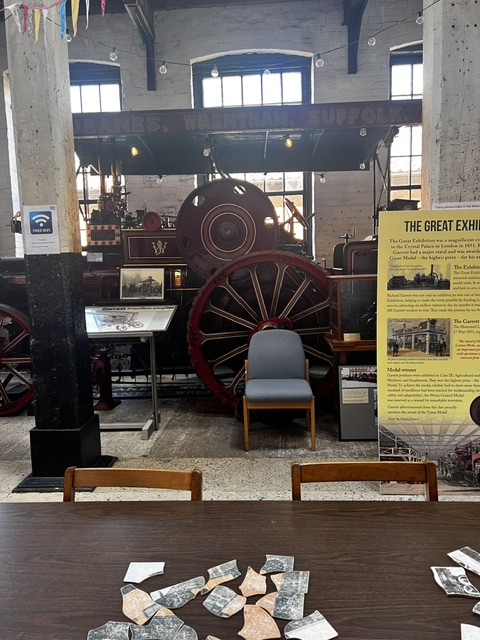
A Look Around the Exhibition Space June 2026
The Long Shop Museum is an exceptional space – full of huge machinery and posters. I was reminded of the challenges discussed in Hans Ulrich Obrist’s book (p32) about displaying disparate works of art.
I had envisaged my map board hung as an introduction to my contribution alongside my abstract alternative photography work or as a stand alone linking with museum boards. I drew together a link between steam and current climate changes in an ‘About’ framed piece.
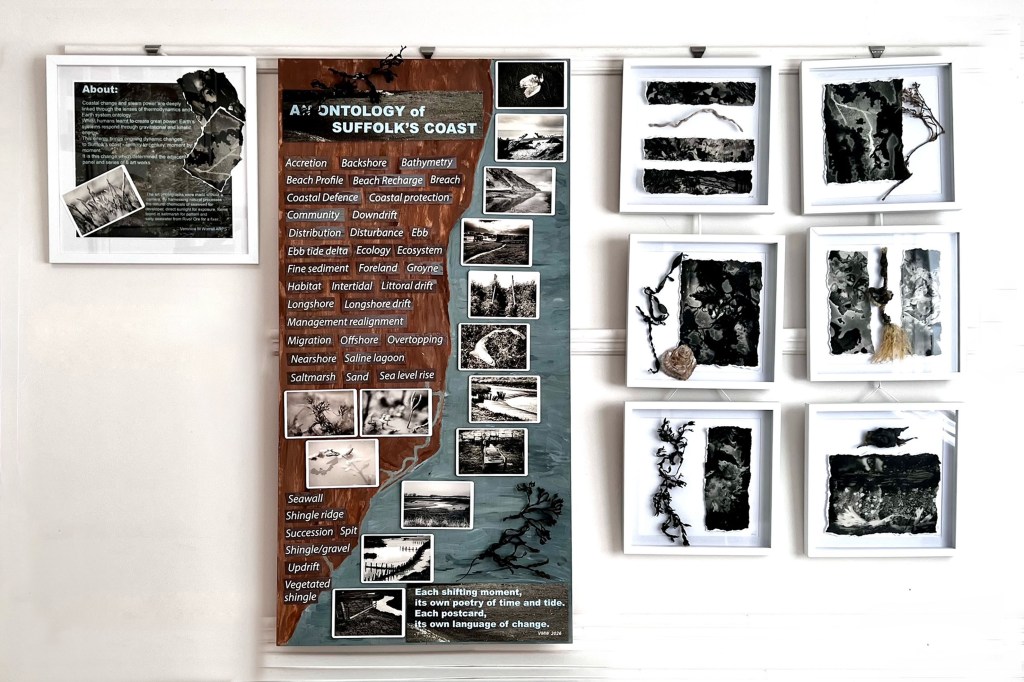
At July meeting advised map board was not suitable for an exhibition of framed images. In addition advised the exhibition space was limited. Consequently my Flux panel of 6 boxed frames and map board have been put aside for future events.
Fortunately I had alternative experimental art pieces and marsh photographic images taken over the last 9 months to call upon.
I took time to decide which cyanolumens represented my vision. These unique prints were mounted into two 40×50 cm frames.
I also perused my favourite marsh photographs. Two of these were printed A3 size on the best archival fine art paper – Hahnemuhle Baryta Rag – and carefully mounted into two 40x50cms plain white frames.
The images I selected show the ongoing magic happening within the marsh. Titles of the 4 images were submitted to the curator .
Please read the description about the techniques used and what each piece means to me in my Collections post of exhibited prints here. https://vmwphotography.com/portfolio/edge-land-project/
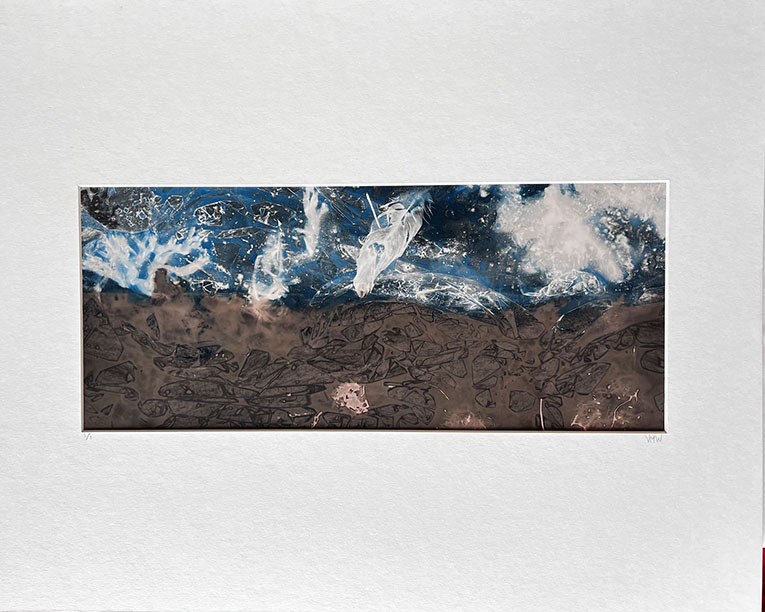
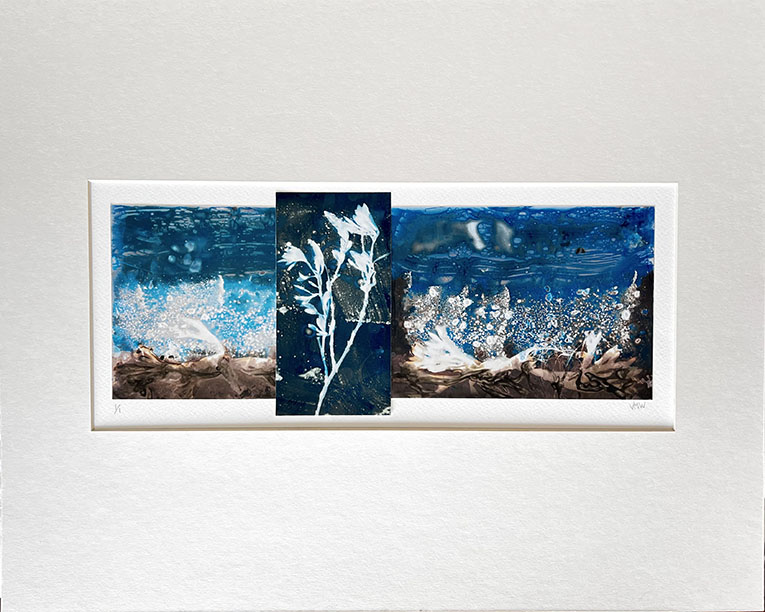
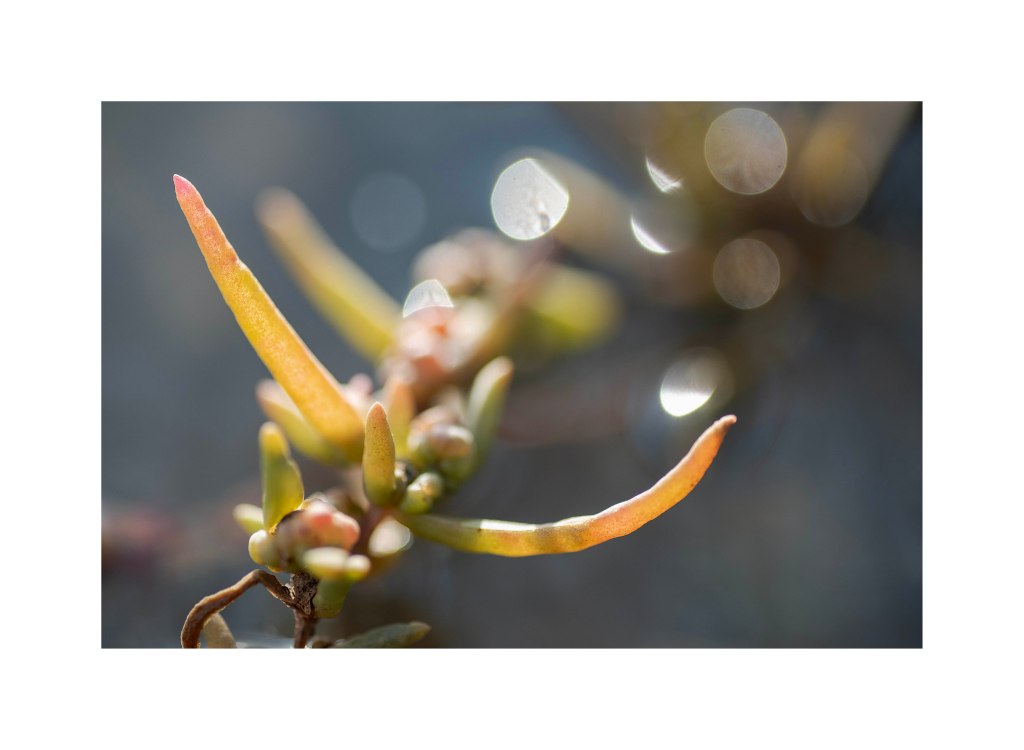
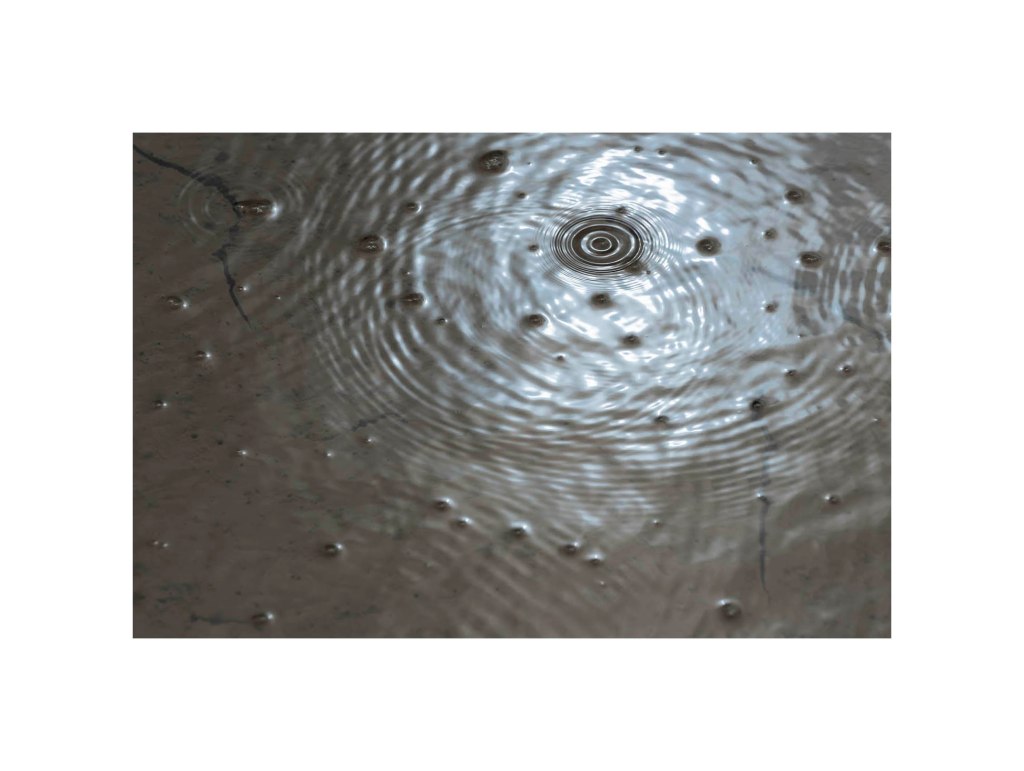
Please view detail about these 4 art pieces here https://vmwphotography.com/portfolio/edge-land-project/
This 150 word bio was sent (prior to July mtg) to be included in an exhibition leaflet.
Veronica creates unique fine art prints using hand-crafted alternative and historic photographic processes on light-sensitive paper. While most works are one-of-a-kind, selected images are reproduced as limited editions to further explore themes of environmental storytelling. Sustainability lies at the heart of her practice, with local natural materials, sunlight and seawater integral to the making of each piece.
Suffolk’s coastal landscape is shaped by the continual forces of natural erosion and accretion. However over the past centuries, around 85% of its salt marsh has been drained for agriculture. Currently, significant restoration projects are in progress to help address this loss. Salt marsh is now recognised as vital natural flood defence, important carbon sink, and rich habitat that supports diverse birdlife and marine species. In the face of climate change and rising sea levels, these fragile ecosystems have become more valuable than ever, inspiring Veronica’s exploration of a coastline in transition.
Part 2 of this blog will capture my journey following the first exhibition to the final show summer 2027
For the 2027 exhibitions I discussed with curator in Aug ’26, my plan to undertake further alternative photography and possibly produce much large collages of the prints. Advised these shall need framing. Since asked to write about Alternative Photography. I explained that Amy Gladding and I have intended to collaborate to make chromatographs of the soil types in SWT reserves.
© [2025-2030] [Veronica M Worrall, VMWphotography]. All Rights Reserved.
NB This is not written using AI – it is my own written work. It is my articulation of my own experience. I treasure the journey of my own critical thinking and creative reflections. In the age of AI, I am determined to persevere without its instant solutions.
 Veronica M Worrall ARPS